What Can Go Wrong
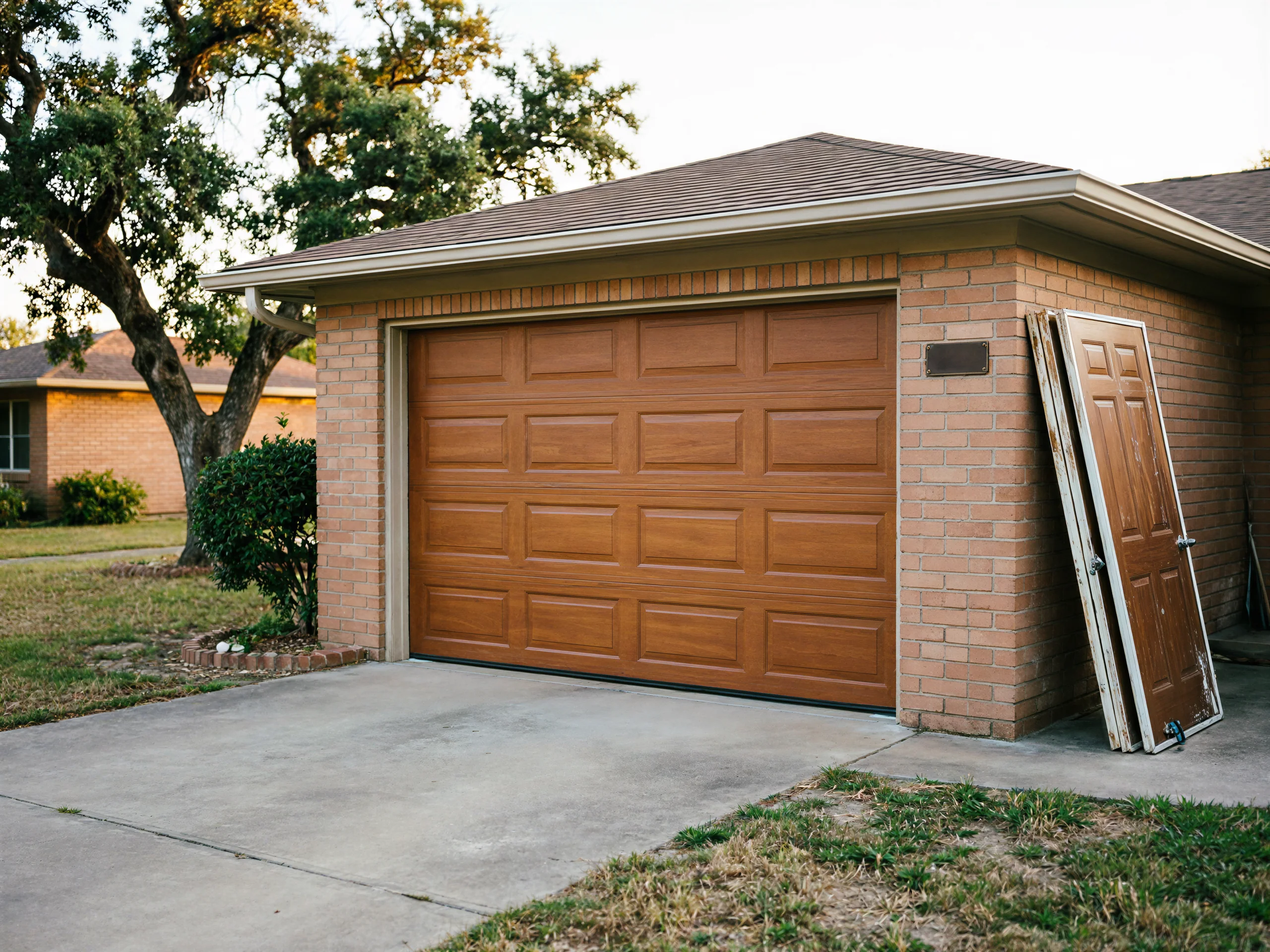
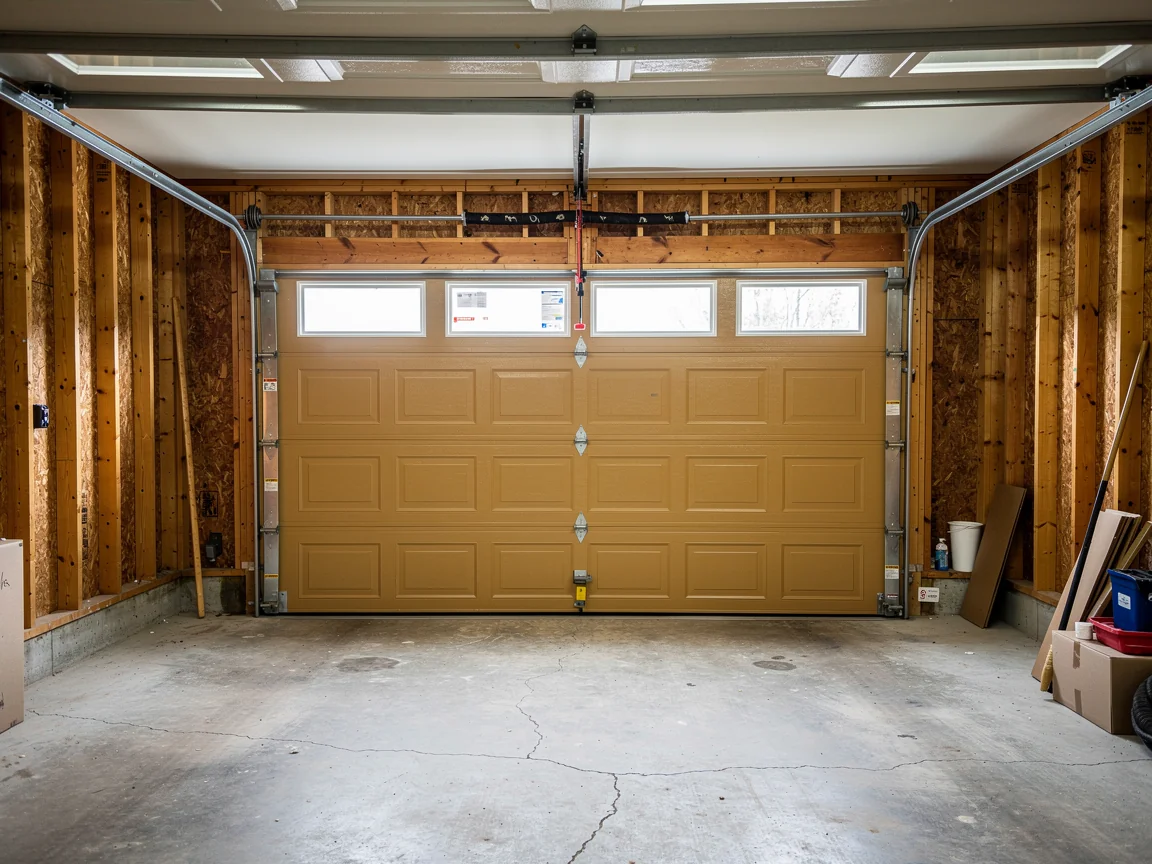
Most houses in Farmington went up around 1998, which puts the garage door itself squarely in the steel sectional era - raised-panel or flush-panel steel, usually a 16x7 double or an 8x7 single, hung on torsion springs mounted on a shaft above the opening rather than the older side-mounted extension springs you'd find on anything built before the 70s.
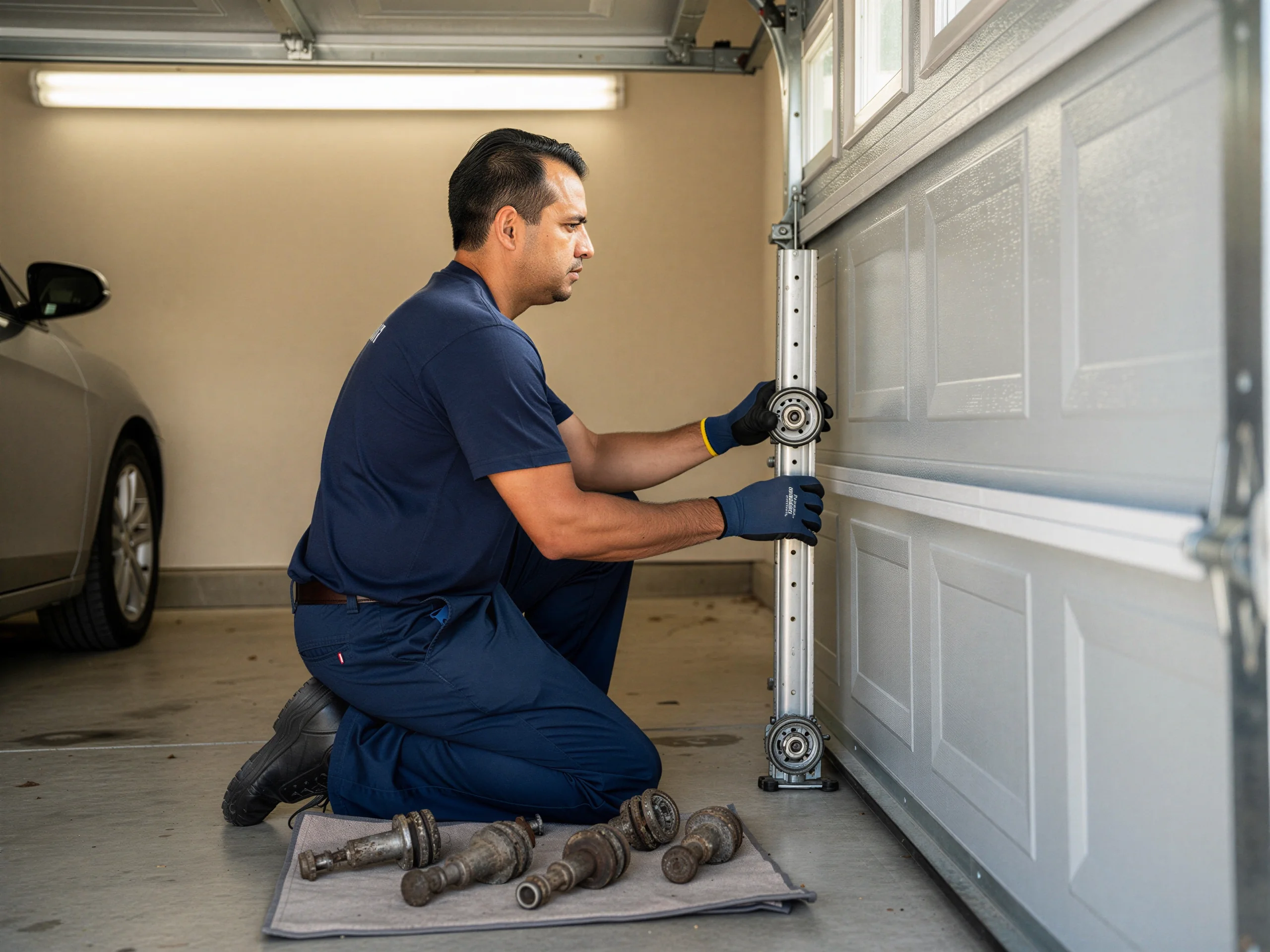
Aging torsion hardware
That's the good news: torsion hardware is more predictable to maintain than the stuff it replaced. The bad news is age. A door and spring set installed when the house was built is now pushing a quarter century of cycles.
Cycle-rated spring life
Torsion springs are rated in cycles, not years, and a spring at that age is near or past its working life even if it hasn't broken yet. Rollers on original hardware are often still the hard nylon or even steel type from that build era - noisier, and more likely to bind in the track.
Obsolete opener replacement
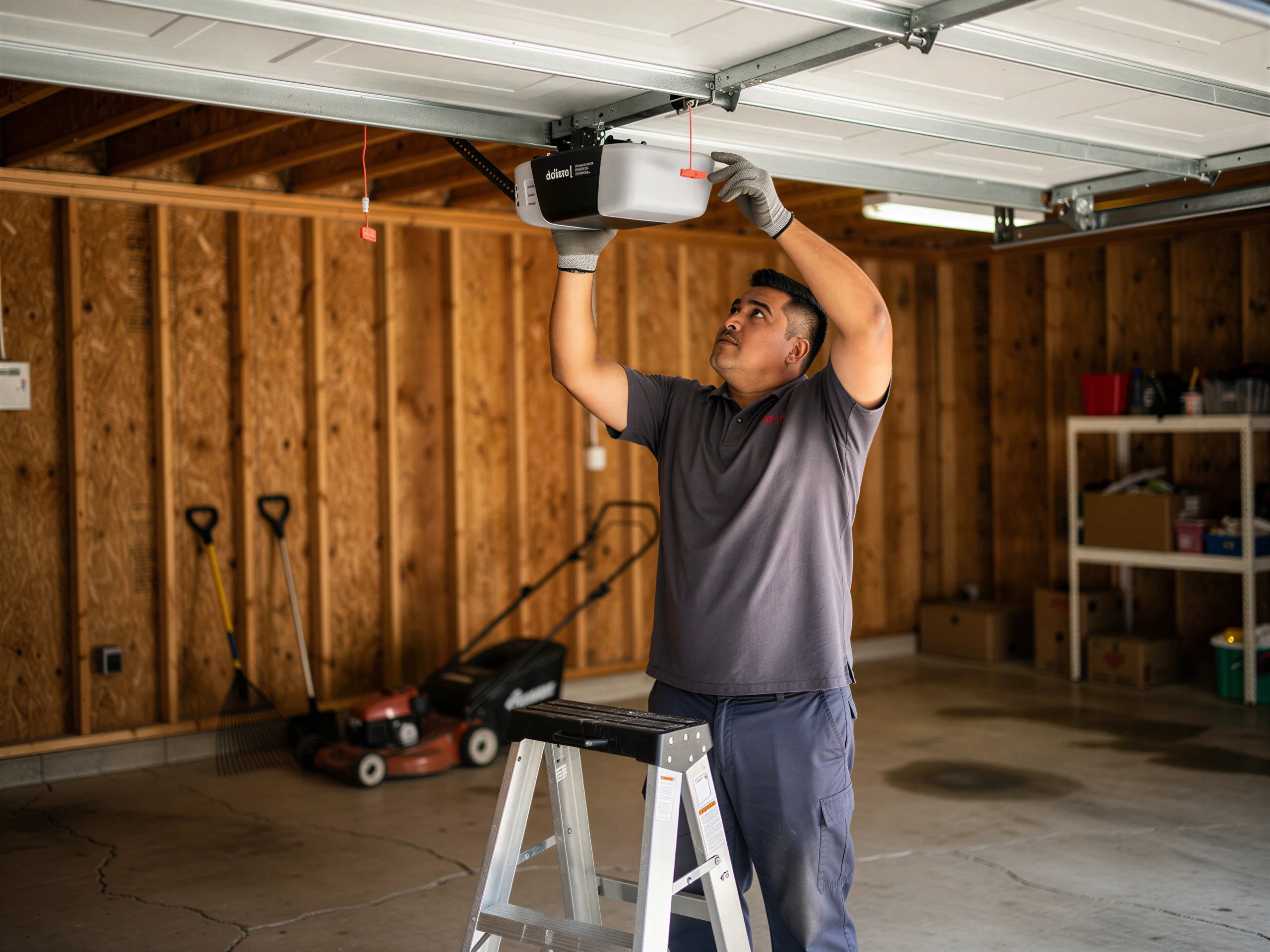
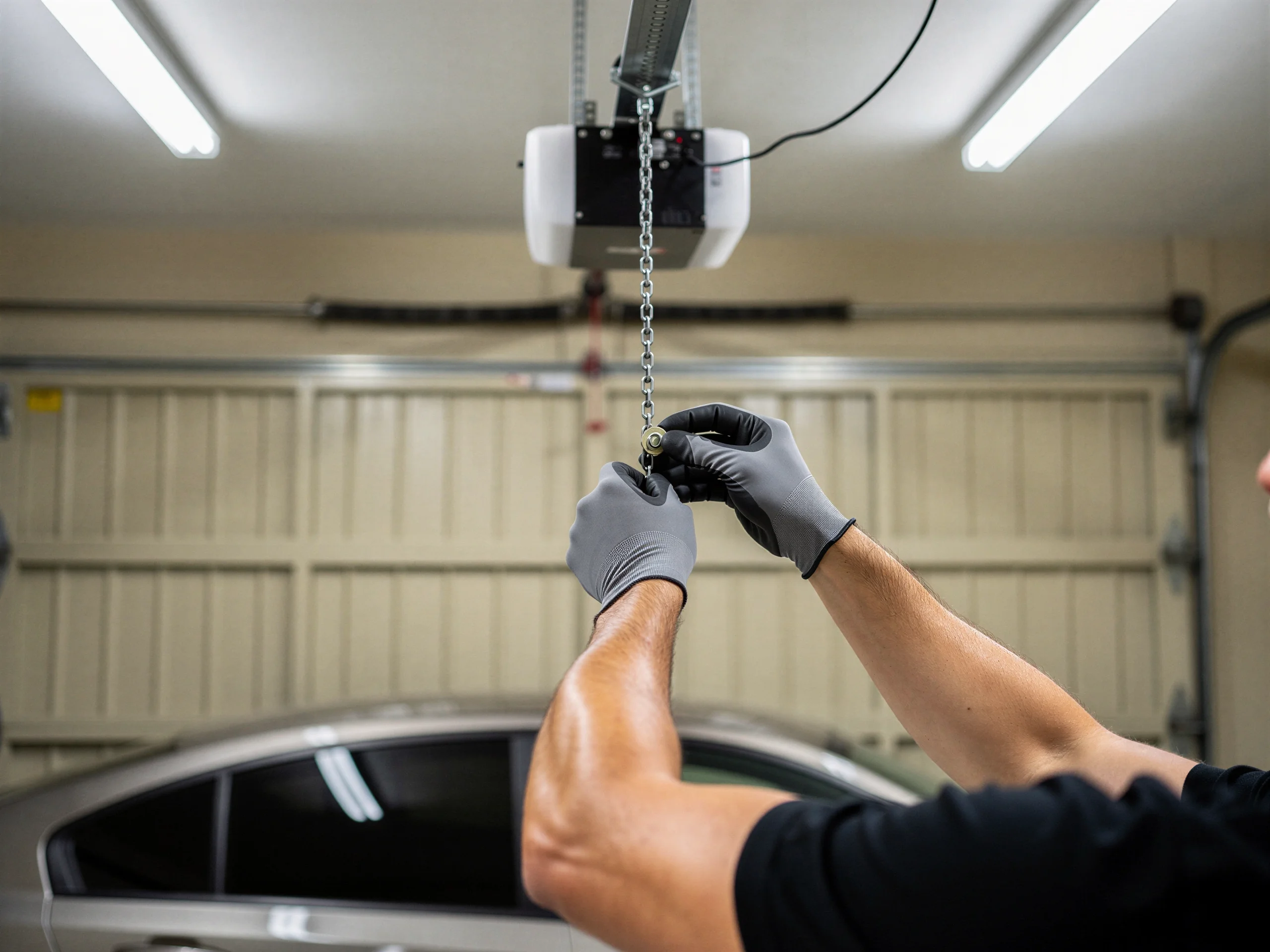
Openers from the late 90s and early 2000s commonly ran chain drive with a logic board that's now obsolete; if yours fails, we may be replacing the unit rather than finding a matching part. We can't tell you which of these has already happened to your door without looking at it, but the age math is the same for most of the neighborhood.
Getting It Booked In
We run out of Fayetteville, about 5 miles from Farmington, so there's no separate branch here - a truck comes from town for the appointment.
Scheduled, not walk-in visits
That's worth knowing because it means we're not doing walk-up same-hour drop-ins; we schedule the visit and come out with the parts likely to be needed for a door of this vintage. When you call, tell us the door size, whether it's one piece or sectional, and roughly how old the opener is.
Maintenance visit stock
For a maintenance visit specifically - spring tension check, track alignment, hardware inspection, lubrication, opener safety check - that information lets us bring the right spring size and roller stock instead of guessing on site.
Uniform hardware generation
Farmington's housing stock is consistent enough in age that we're usually dealing with the same generation of hardware call to call, which keeps the visit efficient once we're in the driveway.
Parts We Carry
For doors from the 1998 build era, the parts we stock on the truck most often are torsion springs sized for 16x7 and 8x7 steel sectional doors, standard-lift and high-lift cable, and nylon rollers to replace the harder original ones that have started chipping tracks. We also carry galvanized track sections, since track on a door this age has usually taken at least one ding from a car bumper or a ladder.
What we don't carry on the truck: openers. If your original chain-drive unit from that era has a failing logic board, we can't source a matching replacement board on site - those were discontinued years ago - and the honest fix is a new opener, which we'd quote separately rather than bundle into a maintenance call. That's the one limitation worth knowing up front: maintenance keeps the door and spring system running longer, but it won't resurrect a dead control board.
How It Shows Up
On a door this age, the early signs are almost always mechanical, not electrical. A torsion spring losing tension shows up as the door feeling heavier when you lift it by hand with the opener disengaged - that's the test we'd ask you to try before we come out. Rollers from the original install start sounding gritty or grinding as the nylon wears, especially on the curved section of track where the door transitions from vertical to horizontal.
Cable fraying is another one tied to age rather than weather here - Farmington sits in the same cold-moderate climate band as the rest of the service area, so it's wear cycles more than winter cold that takes these doors out. You'll sometimes see a frayed strand near the bottom bracket before a cable fully lets go.
If the opener itself is original, listen for it straining or reversing mid-close - that's often the spring compensating, not the opener failing, and it's the kind of thing a maintenance visit catches before it becomes a broken spring call.
How We Fix It
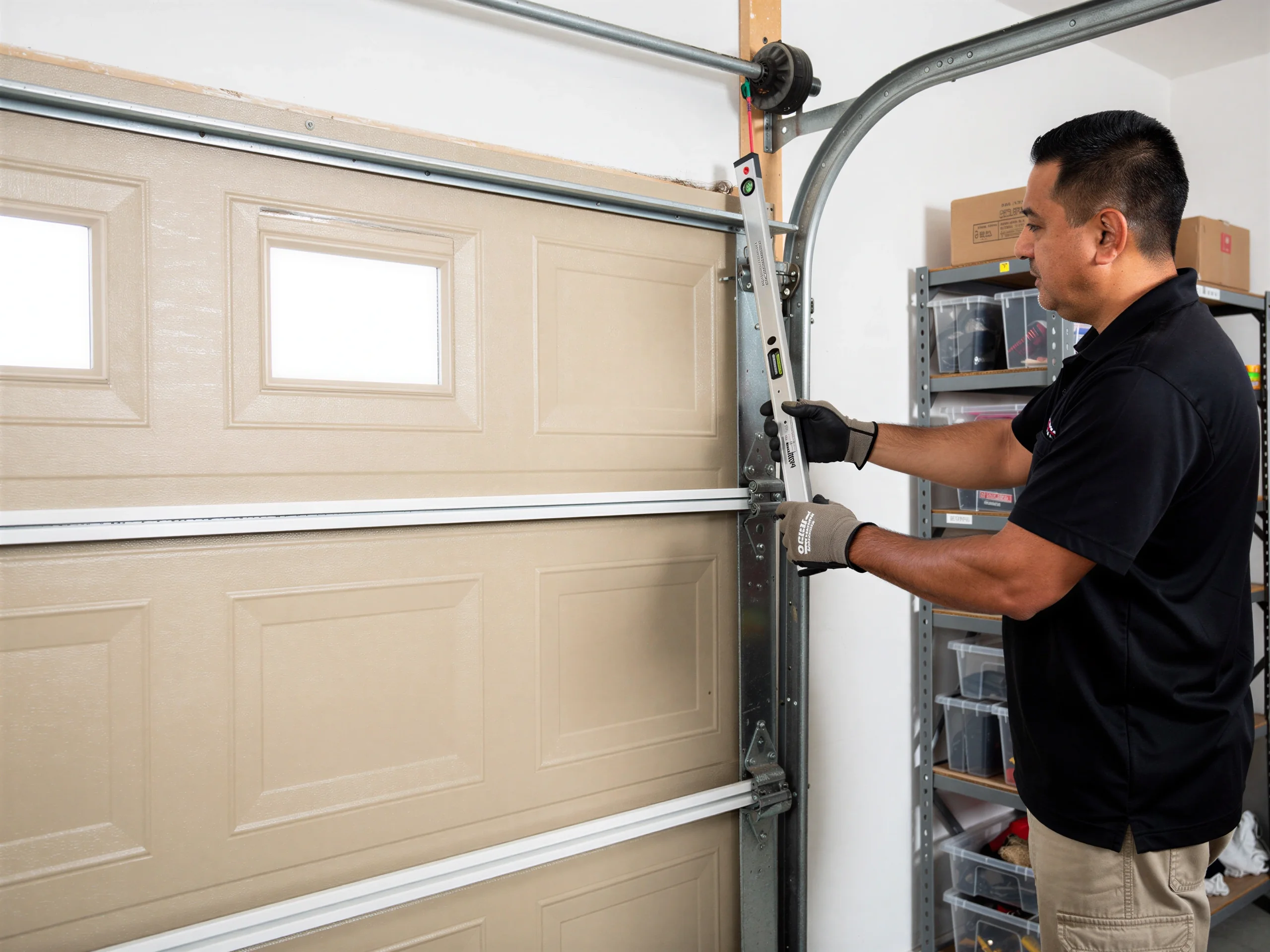
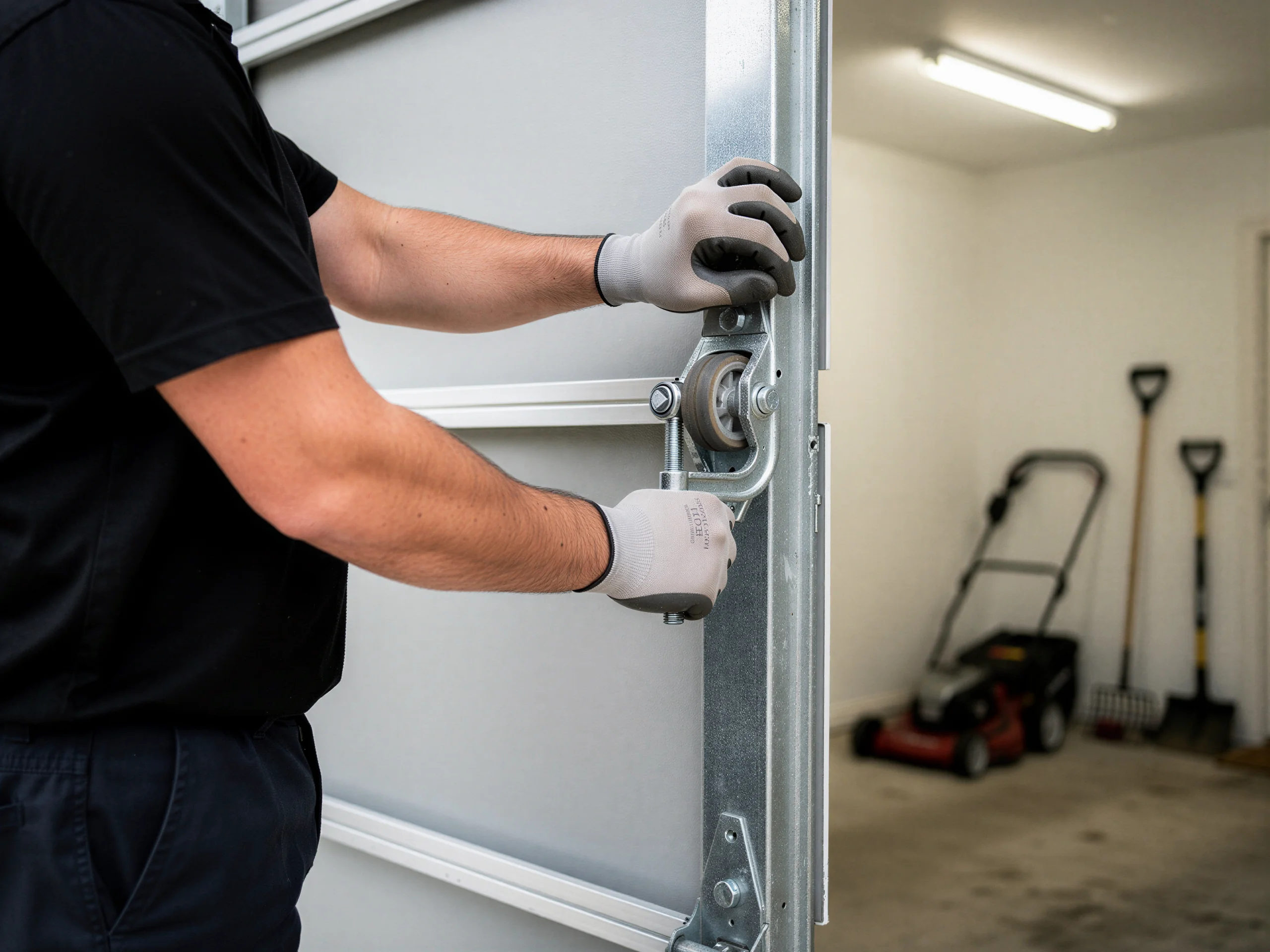
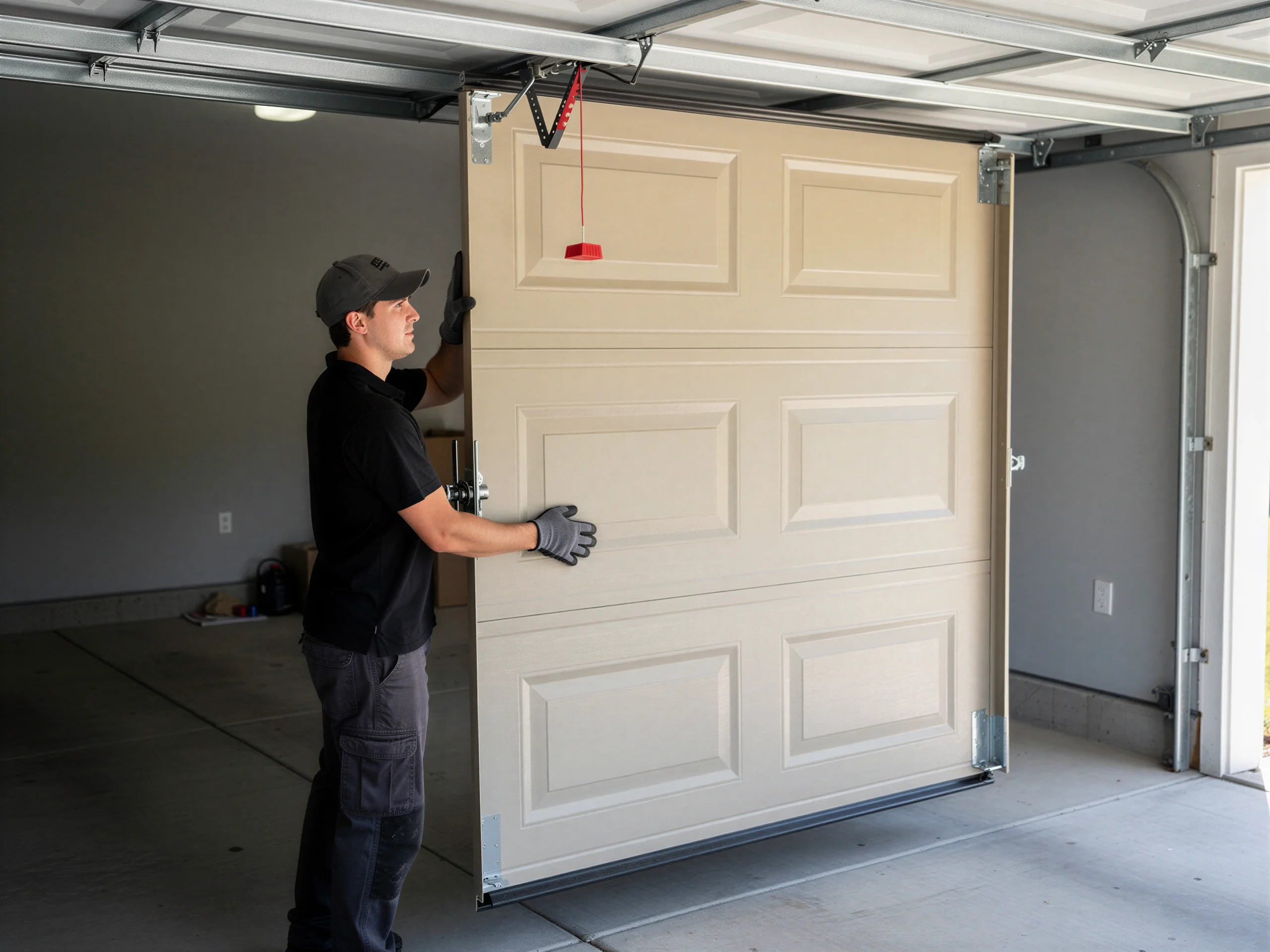
For a standard maintenance visit on a door from this era, we check spring tension and adjust or flag for replacement if it's near end of cycle life, inspect and lubricate rollers and hinges, check cable condition at the drums and bottom brackets, and run the opener's safety reverse test.
Rust at bottom panels
On 16x7 and 8x7 steel sectional doors we also check panel seams for rust starting at the bottom section, since that's usually the first panel to show it on a door this old.
Track and spring swap
We adjust track alignment where rollers have worn a groove, and we'll tell you straight if a spring is close enough to failure that waiting for a scheduled visit isn't worth the risk - that's a same-trip swap rather than a note for next time.
Board life not extended
What maintenance won't do is extend the life of an opener's internal board indefinitely. If that's the part failing, we'll say so rather than keep servicing around it.
Talk to a local pro
Garage door service in Fayetteville?
Same-day service with honest, upfront quotes.