How We Fix It
When you call us for a broken door, we're usually looking at one of three things: a snapped torsion spring, a frayed or popped cable, or an opener that's stopped talking to the wall switch.
Spring wear checked first
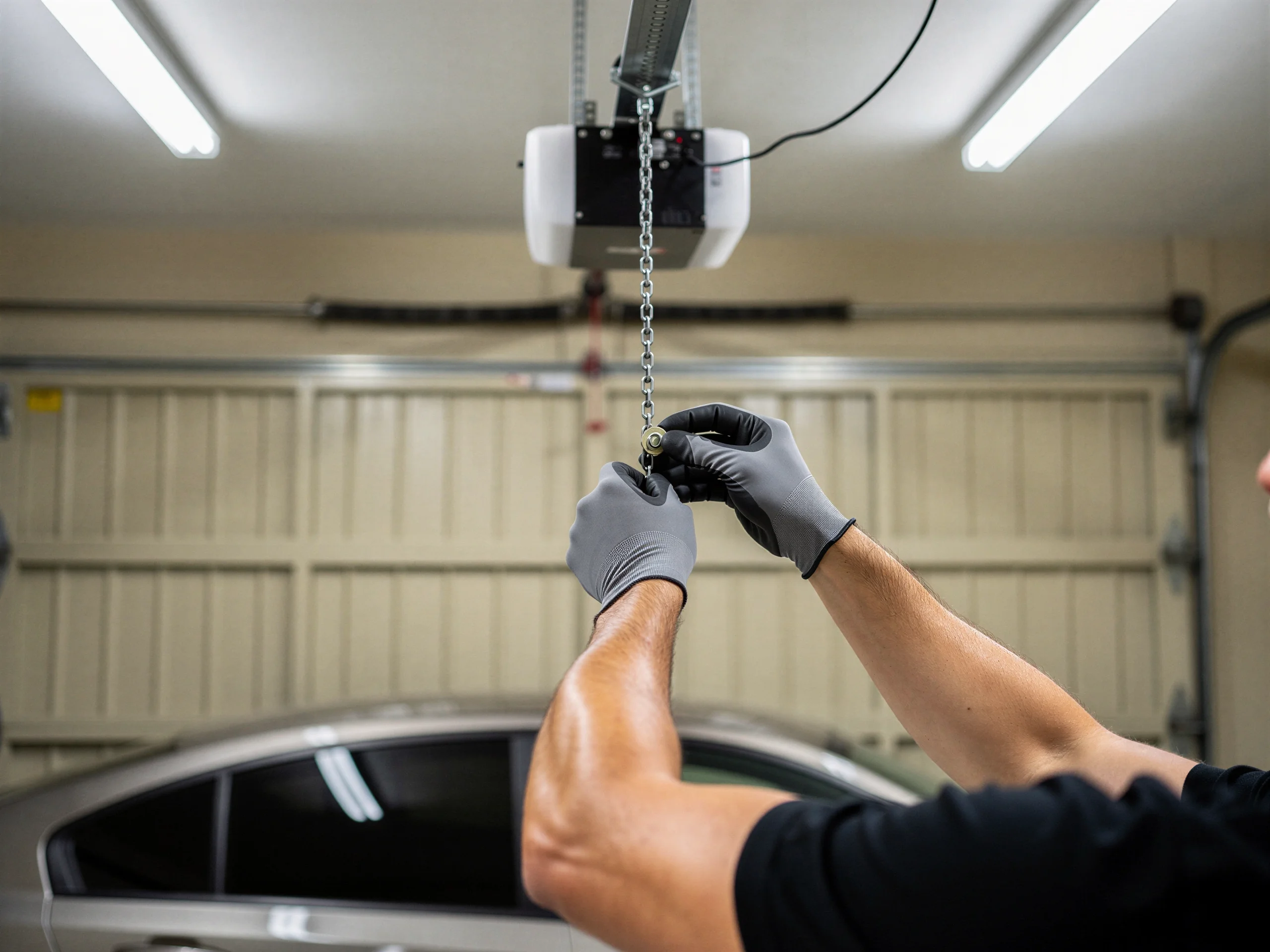
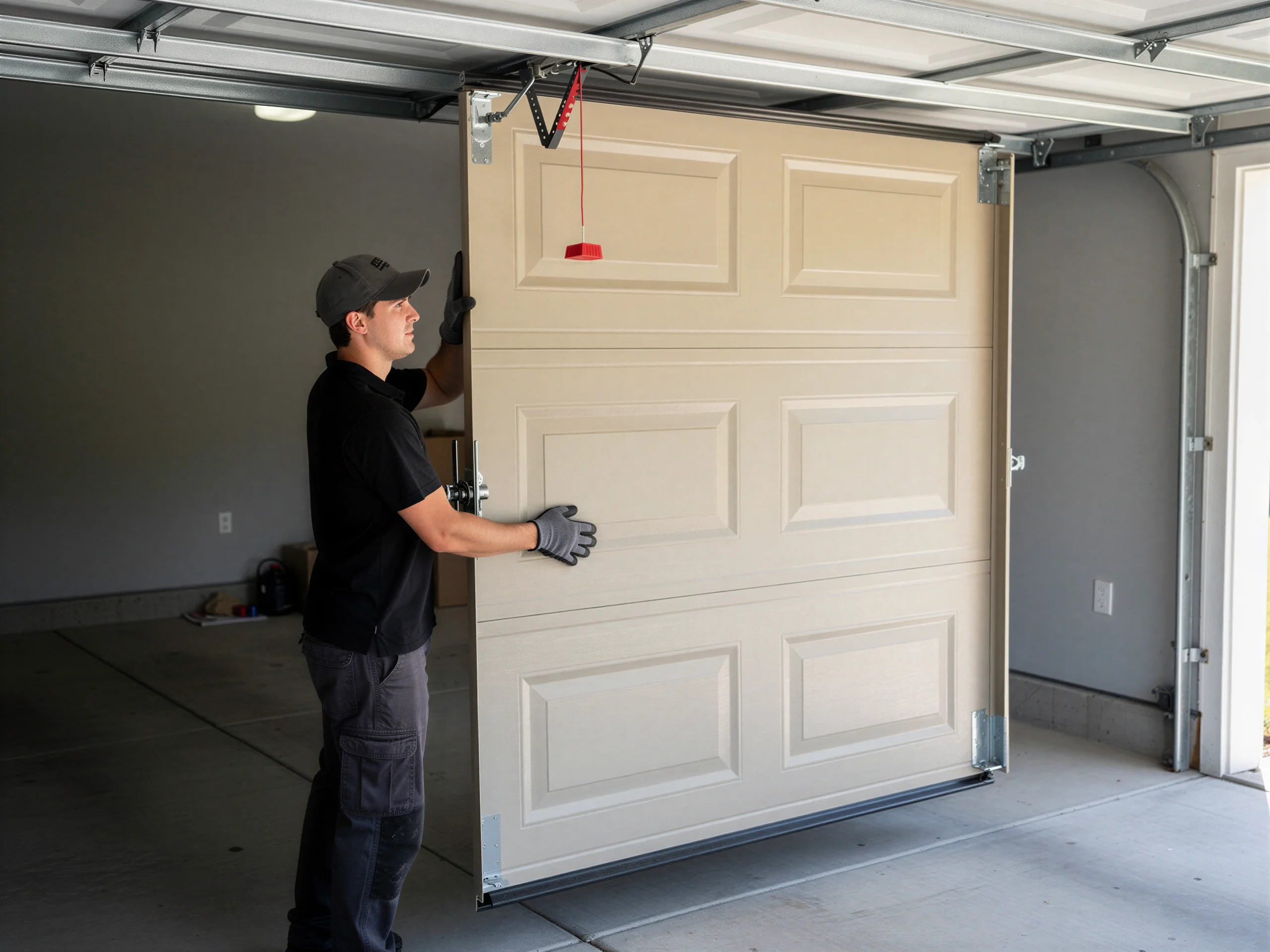
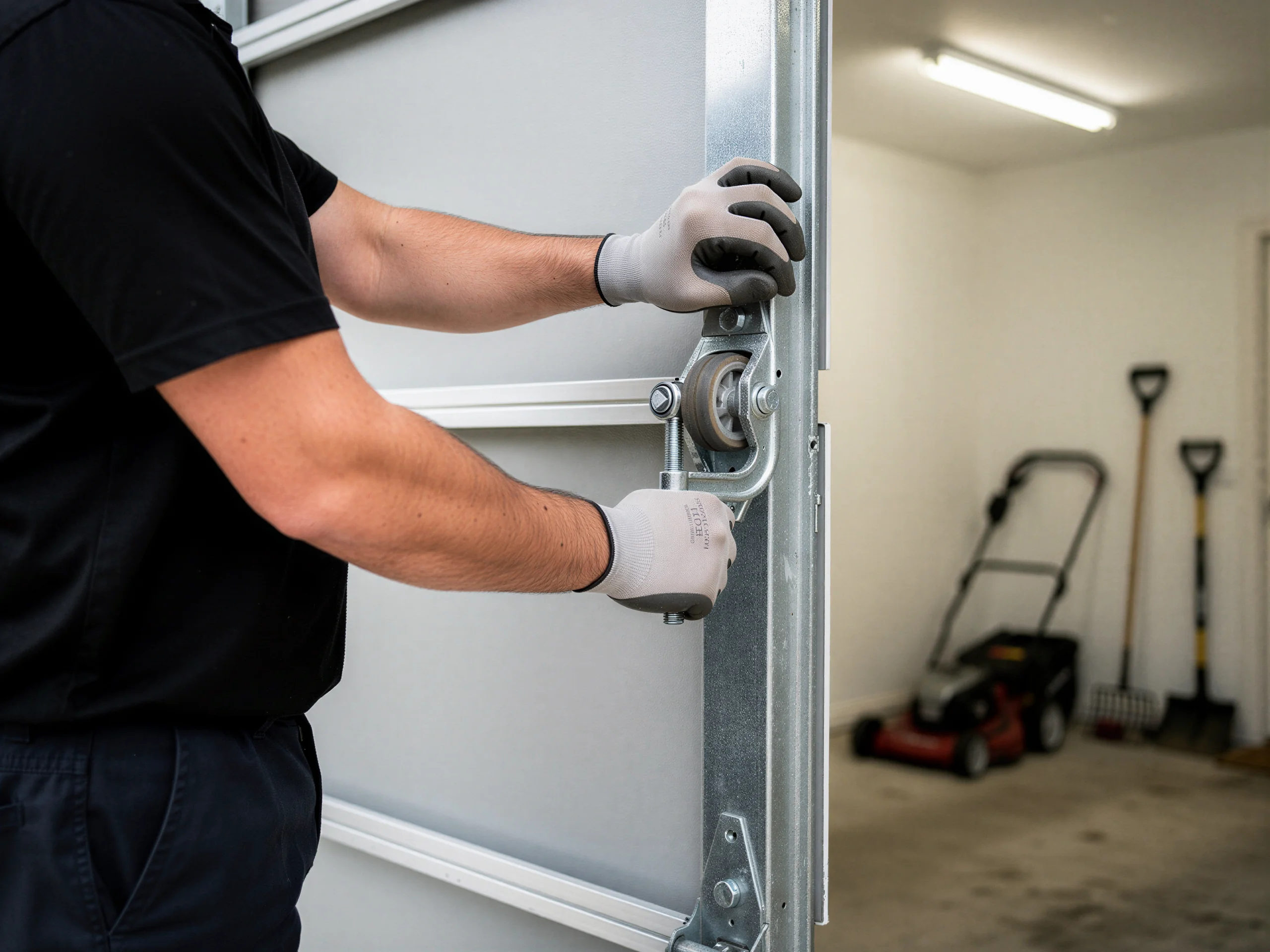
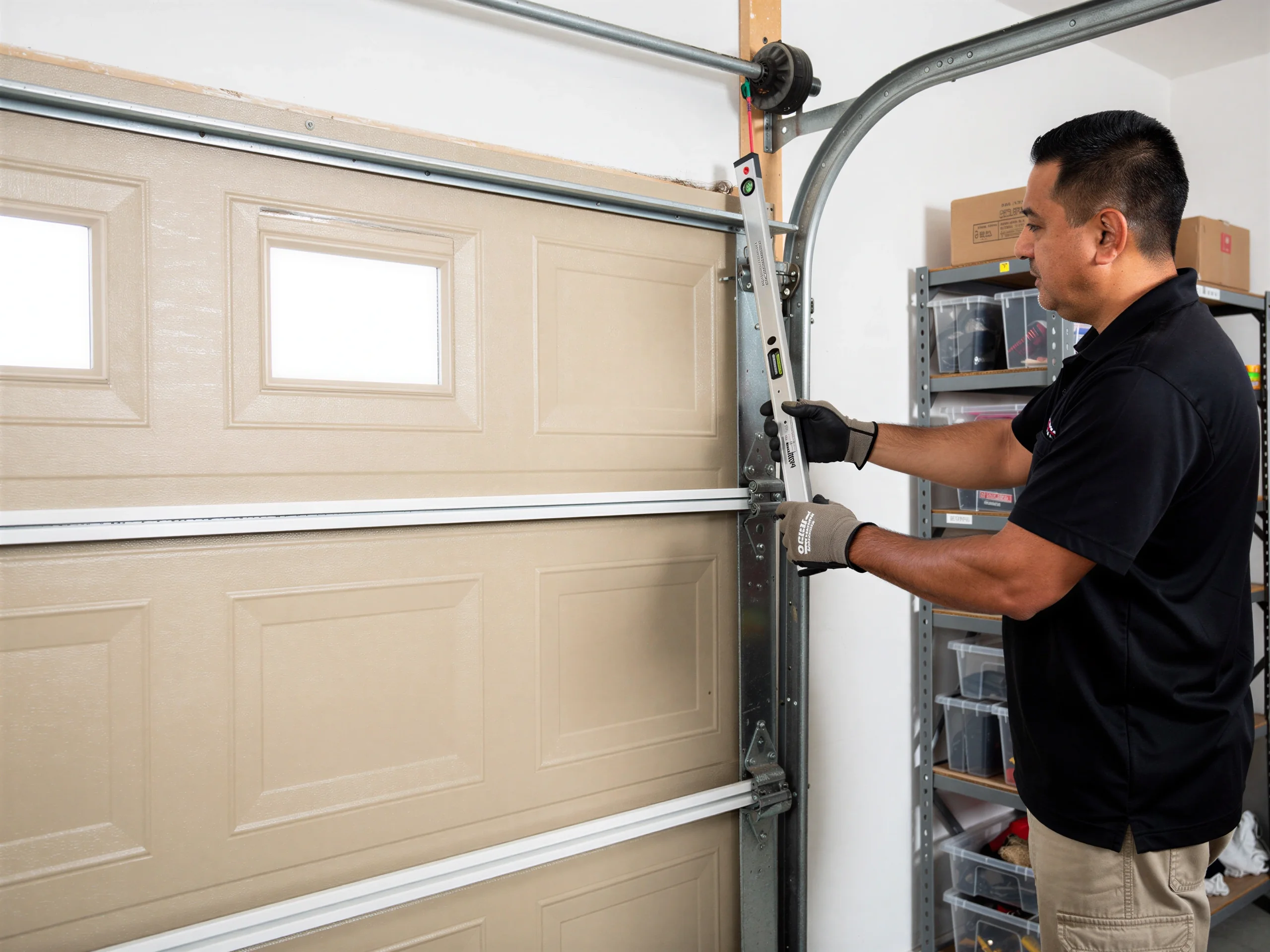
We check the spring wind and cycle wear first, because a spring that's about to go takes the cable with it more often than not. If the track is bent or the rollers are chewed up, we true the track before we touch anything electrical - a door that won't run straight will strip a new opener gear in a season.
Truck stock for common parts
We carry common spring sizes and standard-lift cables on the truck, since those cover most of the doors built across this area's 1980s-90s housing wave. What we don't always have on hand is a legacy opener logic board for a door installed in the late 1960s or early 70s - those parts sometimes take a special order, and we'll tell you that up front rather than make you wait around guessing.
Repair versus replacement cost
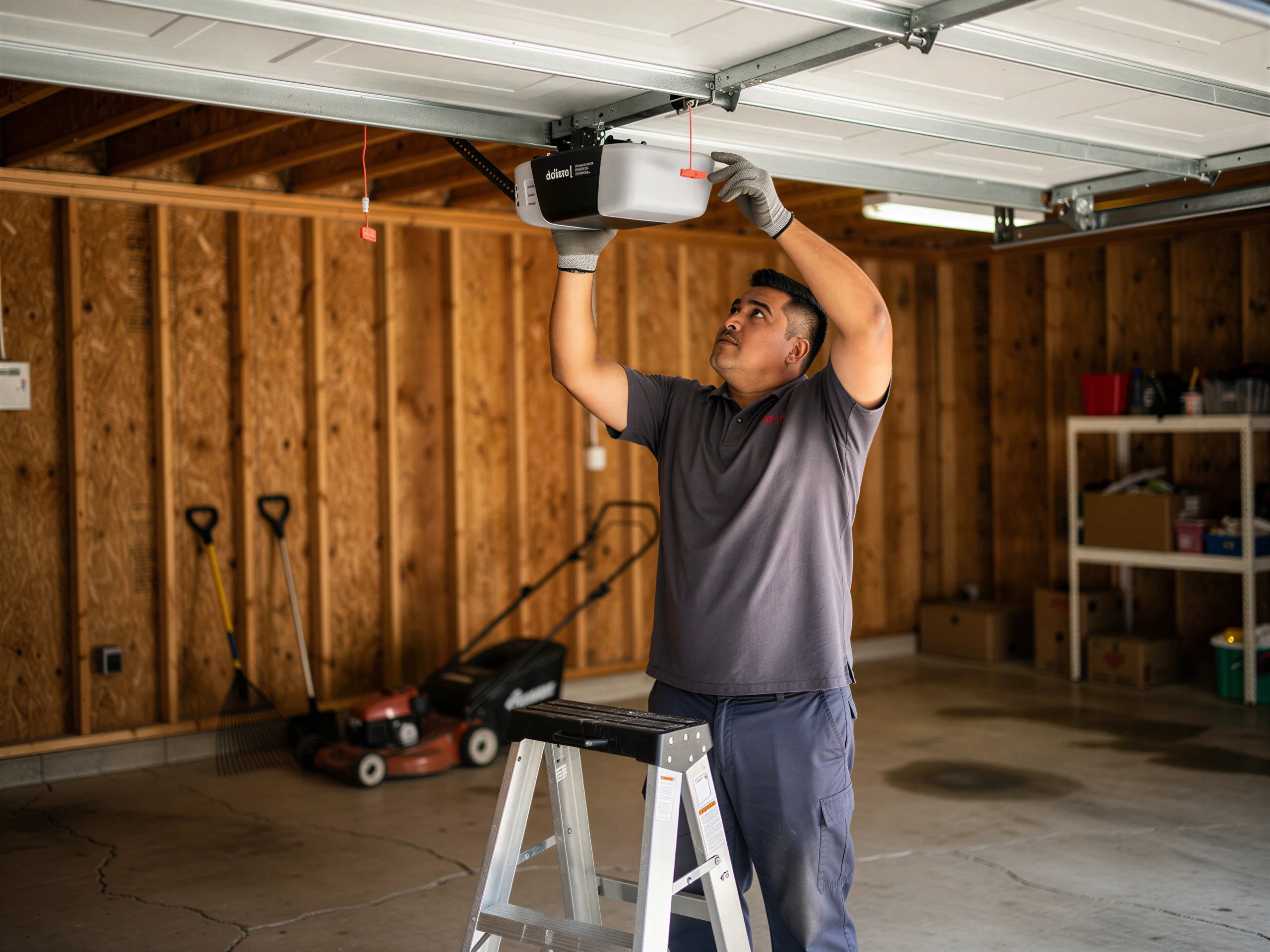
If a repair would cost most of what a new door costs, we say so. Fixing a 25-year-old opener motor that's already drawing hard isn't always the better call, and we'd rather tell you that than bill you twice.
What Causes It Around Here
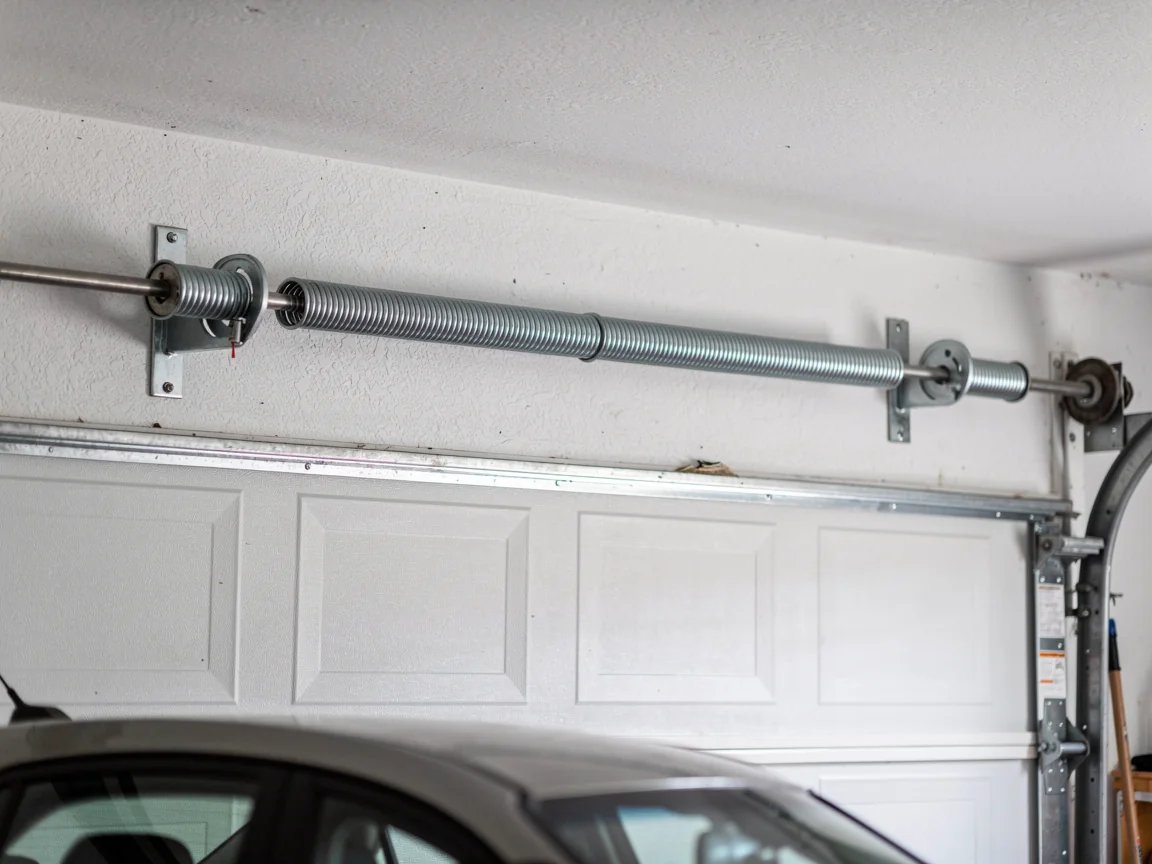
Housing in this service area went up mostly between 1967 and 2013, with the median build year landing around 1998 and the heaviest concentration in the 1980s and 90s across the fifteen named communities we cover. That means a lot of doors are running original torsion hardware that's now 25 to 40 years into its service life - springs rated for a certain number of cycles that are well past the point where metal fatigue starts to matter.
The cold-moderate climate here doesn't help. Steel springs contract in winter, and that contraction adds stress to coils that are already worn thin from age. Openers in unheated garages see the same swing - a chain drive that worked fine in September binds up on the first hard freeze because the grease has stiffened and the motor's pulling harder than it should. None of this is dramatic weather, just the ordinary cold-to-mild swing this area gets every year, grinding on hardware that was never built to last the full stretch between 1967 and now.
How It Shows Up
Most calls start the same way: the door won't open, or it opens partway and reverses itself, or it's making a bang on the way down that wasn't there last week.
Gunshot-like spring snap
A snapped torsion spring usually sounds like a gunshot from inside the garage - if you heard a loud pop and the door won't budge, that's almost always it. A frayed cable shows up differently.
Crooked travel signals cable
The door looks crooked going up, hanging lower on one side, or it jumps and jerks instead of moving smooth. That's a cable about to let go, and running the opener on it risks the door dropping.
Cold-stressed opener strain
Openers that are losing the fight with cold hardware tend to strain audibly - a grinding or straining motor sound right before the door moves, or a door that stops a few inches up and reverses. If your door is from the older end of the 1967-2013 build range here, these symptoms show up more often in the first hard cold snap of the year than any other time.
Getting It Booked In
We run calls across Fayetteville and the towns nearby - Johnson, four miles out, Farmington and Greenland at five, Tontitown at eight, and on out to Elkins, Goshen, West Fork, Prairie Grove, Elm Springs, Lowell, Cave Springs, Lincoln, Highfill, Prairie Creek, and Winslow at the far edge of the service area. Across those households - 22,268 total, with 14,904 owner-occupied houses - the mix of door ages and hardware is wide, so tell us the symptom and roughly how old the door is when you call; that gets us to your garage with the right spring size and cable length already on the truck instead of guessing at the curb. You can reach us through the site at the link below.
Talk to a local pro
Garage door service in Fayetteville?
Same-day service with honest, upfront quotes.