How We Fix It
When a homeowner calls about a new opener, the first thing we look at is the door itself, not the box on the shelf. A lot of the homes across this service area were built between 1967 and 2013, with the median landing around 1998, and that spread matters: an opener that's correct for a 1998-build double-car door isn't always right for a heavier insulated door someone added later.
Pre-install site measurements
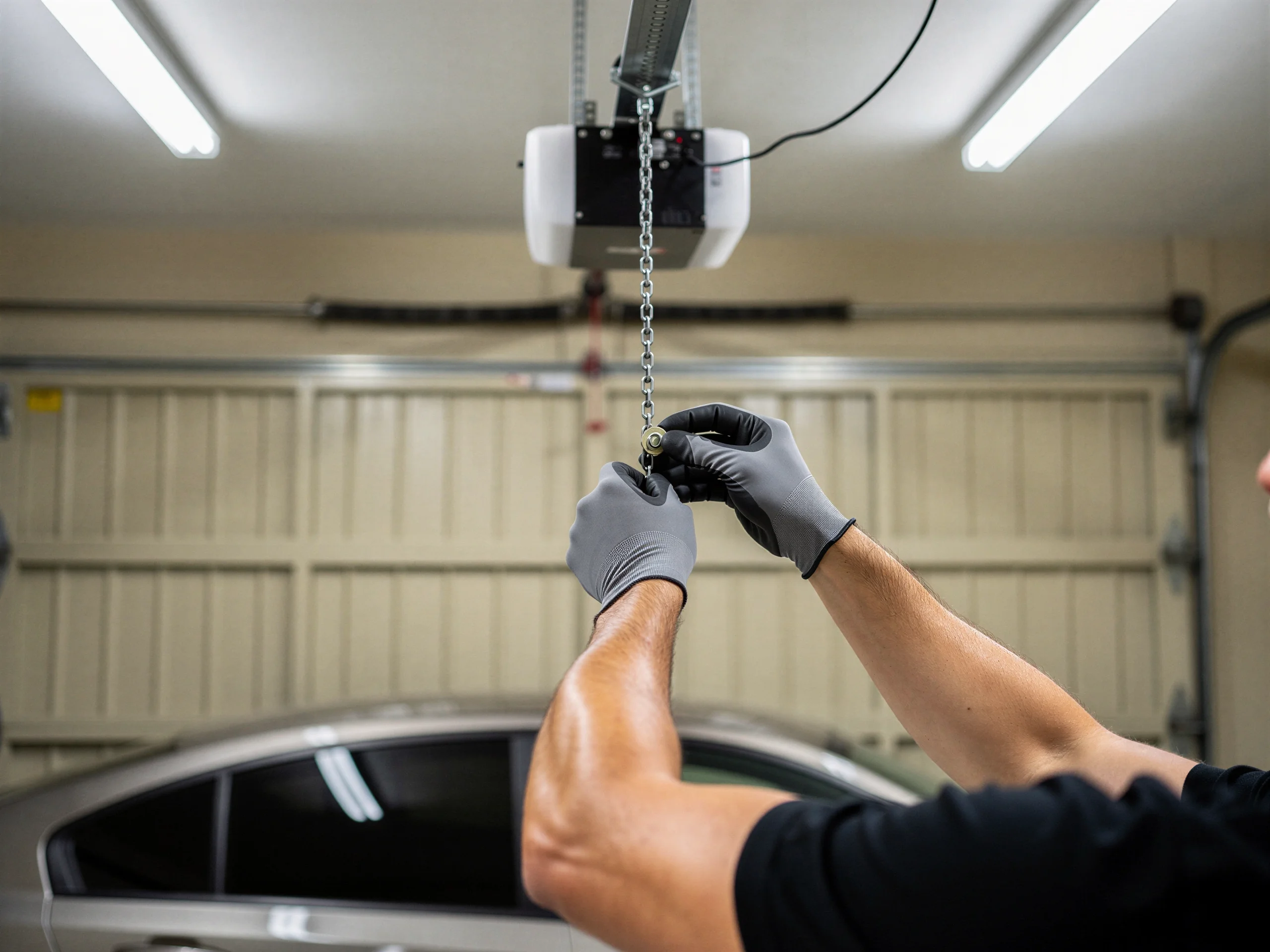
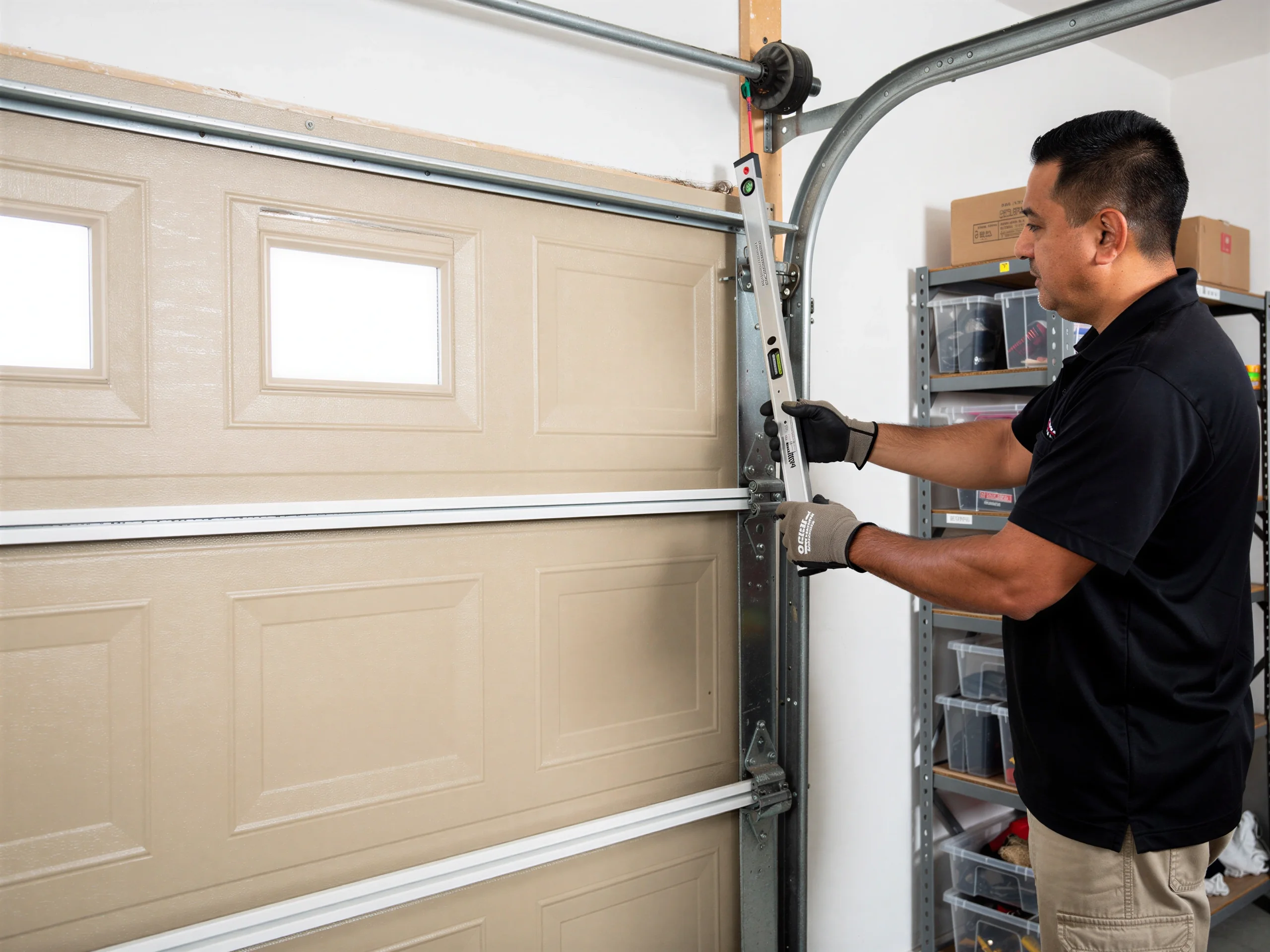
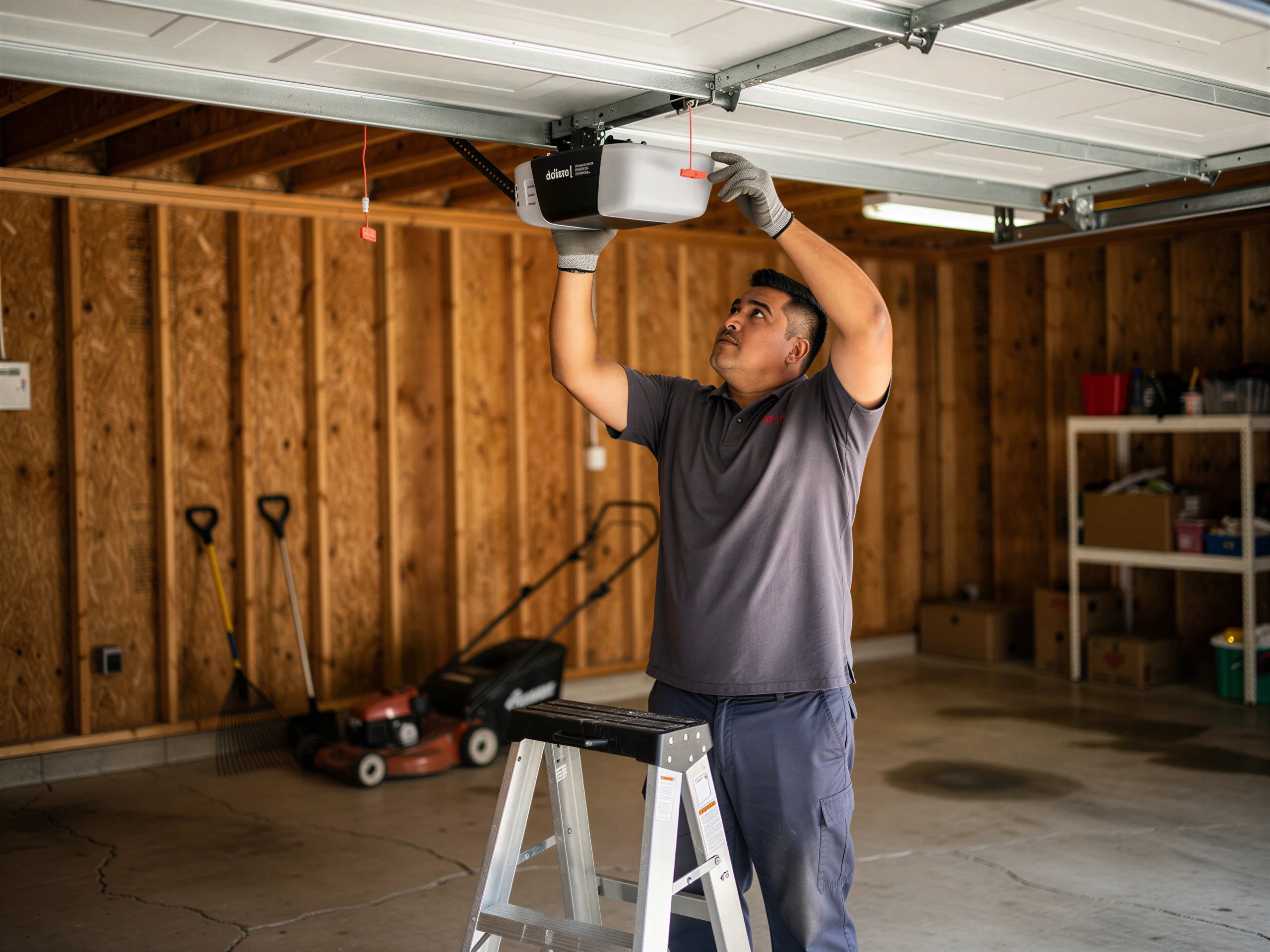
We measure the door's weight and travel, check the header space for the rail and mounting bracket, and confirm the existing wiring can carry the new unit or needs replacing. Installation itself means mounting the rail, setting the trolley and arm, running the safety sensors low enough to catch a kid or a pet, and setting force and travel limits so the door doesn't slam or stall.
Real-object reversal test
We test the auto-reverse with a real object on the floor before we call the job done, not just a quick push of the wall button. If the existing springs are worn, we'll say so before we hang a new opener on them, because a new motor fighting a tired spring fails fast and that's a callback nobody wants.
Fix track before opener
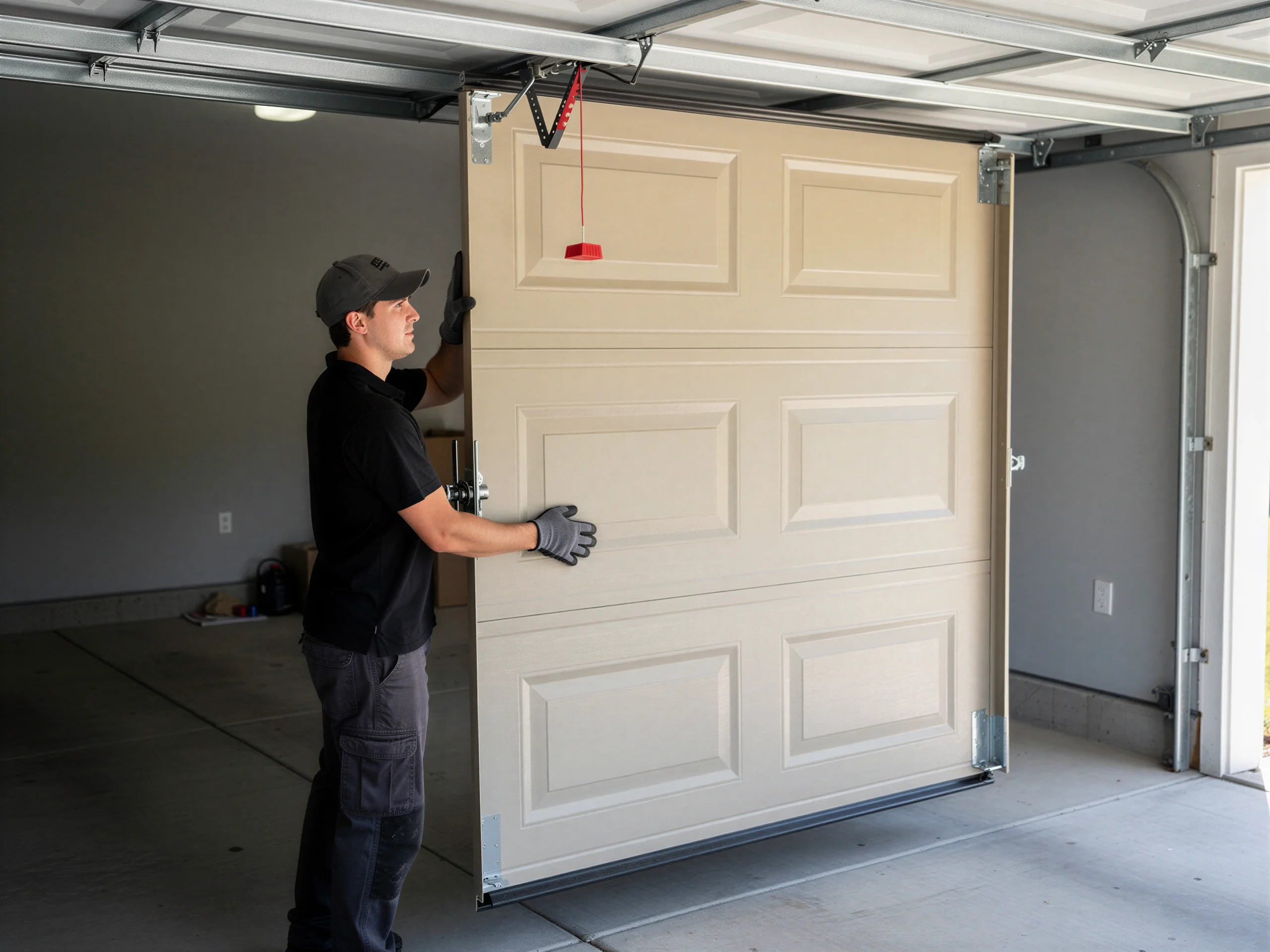
One limitation worth naming: if your track is bent or your door is out of square, a new opener won't fix that, and installing one before the door itself is corrected just wastes the motor's life. We'll tell you when the door needs attention first.
What Causes It Around Here
Most opener failures we see across this service area trace back to one of two things: age of the unit, or mismatch with the door. Housing stock here runs mostly 1980s and 90s across the fifteen communities we work in, which means a big share of openers in service right now are on their second or third chain, capacitor, or circuit board - older chain-drive units from that era simply weren't built with the logic boards and rolling-code security that newer openers carry standard.
The cold-moderate climate also plays a role, though people don't always connect the two. Winter temperature swings make steel rails contract and expand, which loosens mounting bolts over a season or two, and cold snaps are hard on older motor capacitors and lubricant in the gear housing. An opener that's labored all through one winter often fails outright at the start of the next.
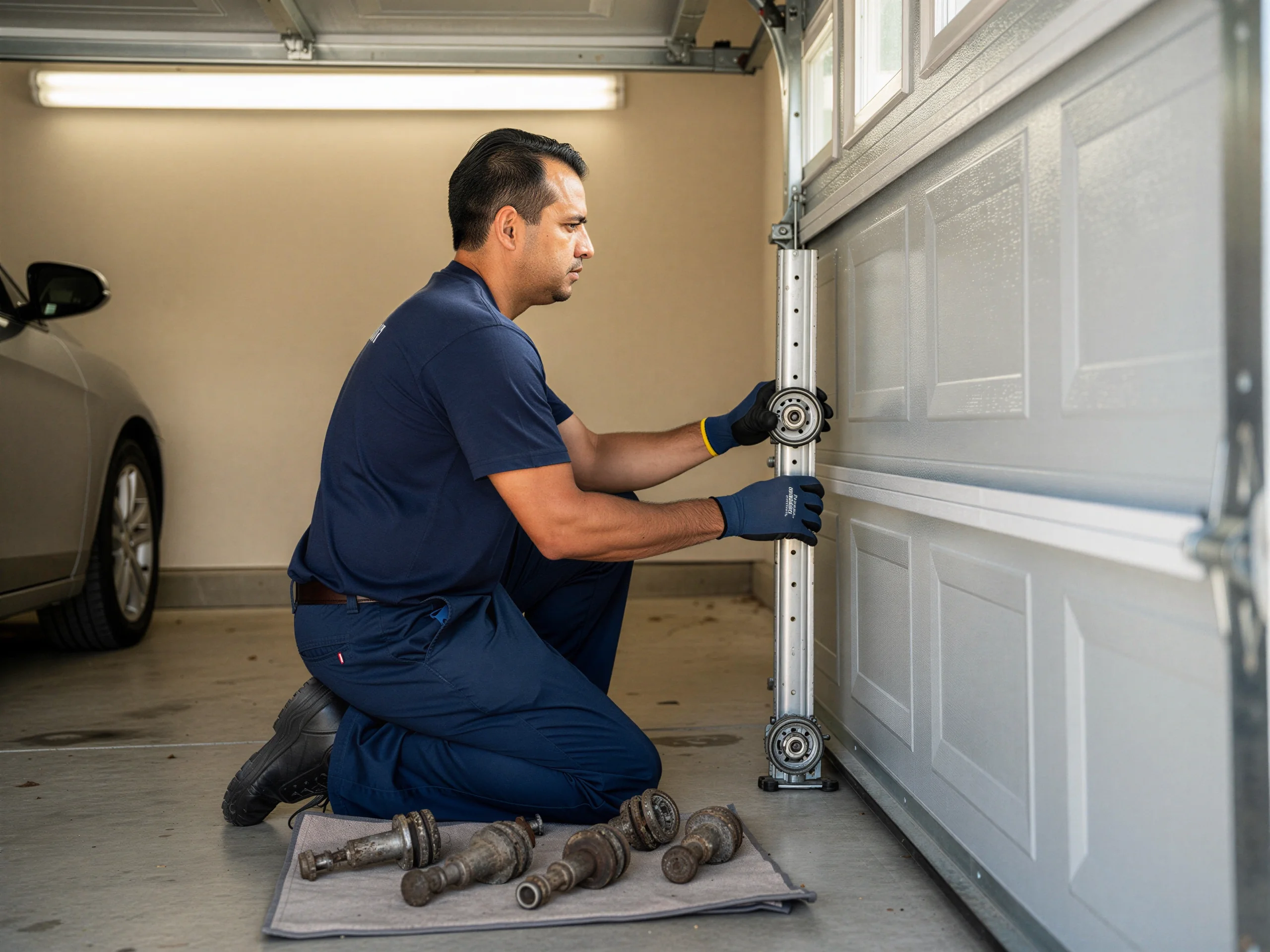
We also see mismatches where a homeowner replaced a lightweight original door with a heavier insulated one and kept the original opener. The motor strains, the gears wear faster, and eventually it just won't lift. None of this is dramatic - it's wear that builds quietly for years before the opener quits on a Tuesday morning when someone's already running late.
How It Shows Up
The most common complaint is a door that hums or clicks but doesn't move - usually a stripped gear or a dying capacitor, both more common in units that have logged a decade or more through repeated winter temperature swings.
Long run before lifting
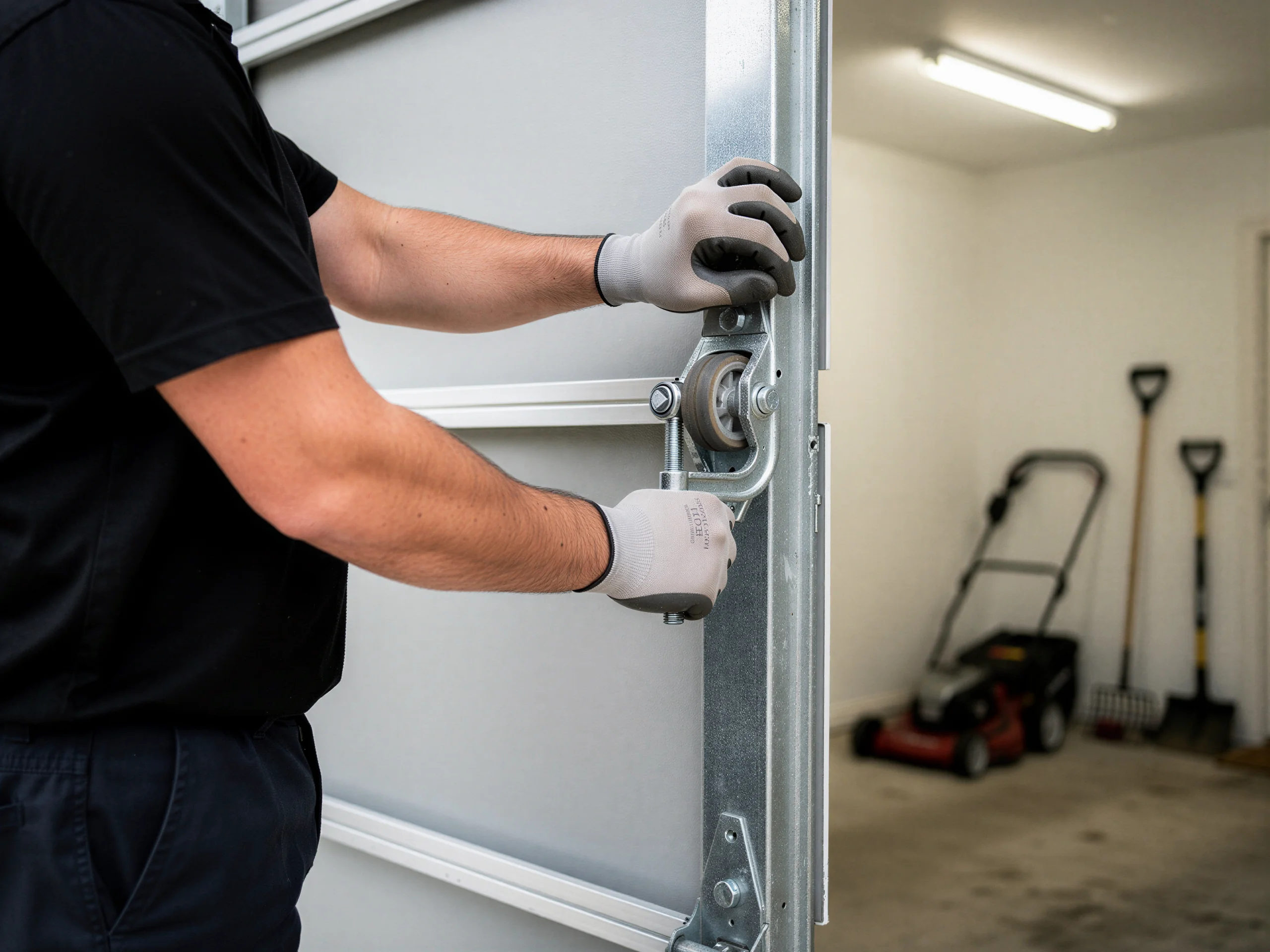
Some owners notice the opener running longer than it used to before the door actually lifts, which usually means the motor is laboring against worn rollers or hardware that's loosened over time. Others call us because the remote works intermittently or not at all, which on older chain-drive units is often a logic board issue rather than a battery problem.
Reversal failure is a hazard
And on homes with the original 1980s or 90s opener still in place, we sometimes find safety reversal has stopped working altogether - the door doesn't bounce back when it meets resistance, which is a real safety issue, not just an inconvenience. A few callers describe a door that opens fine but won't close all the way, stopping partway and reversing.
Bumped sensor bracket
That's almost always a sensor alignment problem, sometimes caused by a bump to the bracket during yard work or snow clearing. It looks like a motor issue but it's usually a five-minute fix once we're on site and can see the sensors directly.
Getting It Booked In
We serve Fayetteville along with Johnson, Farmington, Greenland, Tontitown, Elkins, Goshen, West Fork, Prairie Grove, Elm Springs, Lowell, Cave Springs, Lincoln, Highfill, Prairie Creek, and Winslow.
Aging openers, local volume
Across that whole area we're looking at roughly 22,268 households, about 14,904 of them owner-occupied houses - a lot of garage doors, and a lot of openers reaching the age where replacement makes more sense than another repair. When you call, tell us the age of your current opener if you know it, whether it's chain, belt, or screw drive, and whether the door itself has been replaced since the opener went in.
Rail length and backup
That lets us bring the right rail length and hardware on the first visit instead of a second trip. We'll also ask whether you want battery backup, which matters more here given the climate-related power blips that come with winter storms.
Sizing to door and home
If your household income and home value put you in a newer or heavier insulated door, we'll size the opener to that rather than defaulting to whatever's cheapest on the shelf. Visit our home page to see the rest of what we handle beyond opener work.
Talk to a local pro
Garage door service in Fayetteville?
Same-day service with honest, upfront quotes.