 What a Service Call Covers in Fayetteville
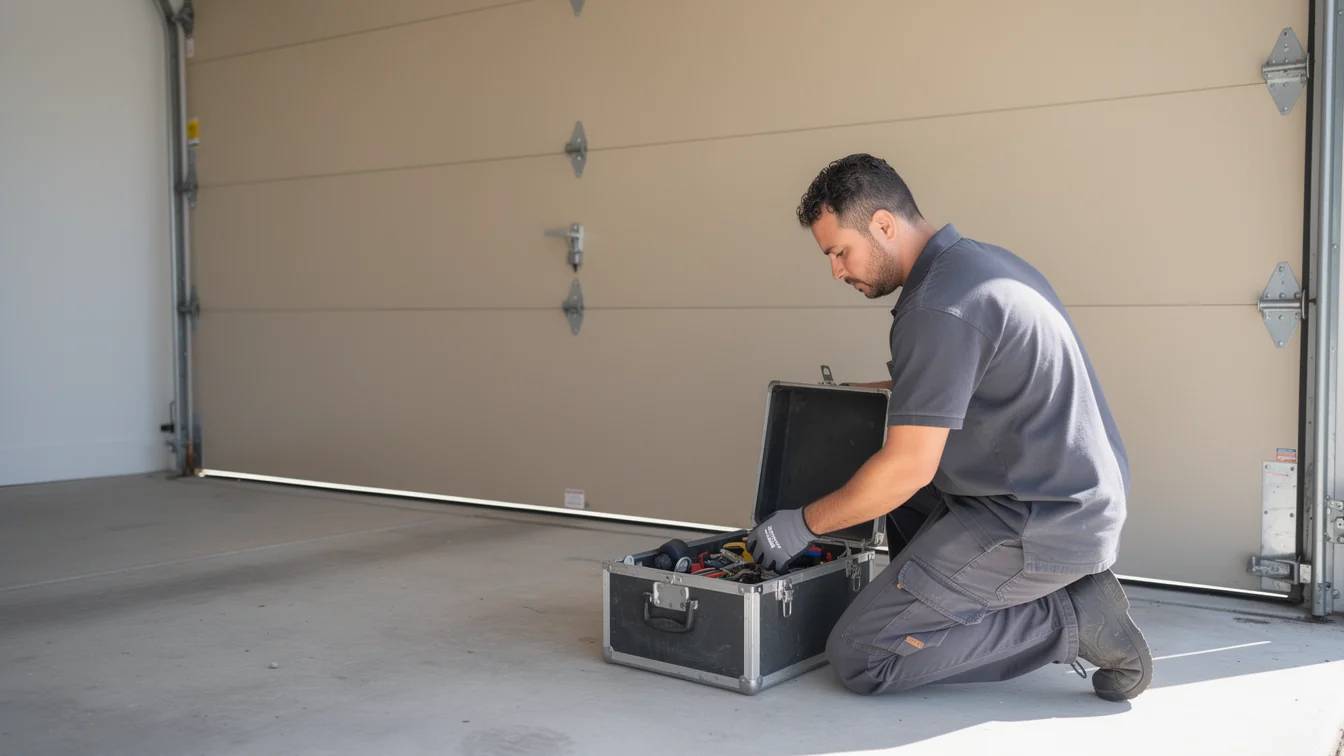
A breakdown of what a Fayetteville Garage Door Pros service call covers, built around this area's 1980s-90s housing stock and cold-climate wear patterns.
The Noises Your Fayetteville Garage Door Is Trying to Tell You
Fayetteville homeowners with 1980s-90s doors: learn which garage door sounds mean a quick fix and which mean a bigger job, based on local housing stock and climate.
Local detail
When to Get Help
A garage door makes noise its whole life. The question is which noise means wear and which means something is about to let go. A rhythmic thump once per rotation usually means a flat spot on a roller - common on doors installed when most of the area's housing went up, between 1967 and 2013, with the median build year sitting around 1998. That puts a large share of doors in this service area right at the point where original rollers and cables are reaching the end of their rated cycles.
A loud bang followed by the door refusing to move is almost always a broken torsion spring. Don't try to open it manually past that point - the counterbalance is gone and the door is heavy. Call that same day.
A grinding sound from the opener head, separate from the door itself, points to a worn gear inside the unit rather than anything on the track. That one isn't an emergency, but it won't fix itself either. If you hear metal scraping metal every time the door passes a certain spot on the track, stop using the door until someone looks at the alignment - a bent track under load can jump the rollers entirely.
The area
What It Costs
We don't publish a flat price list here because the two most common local jobs - spring replacement and roller/track work on 1980s and 90s doors - vary with spring size, door weight, and whether hardware has been upgraded since the original install. A door built to the spec common in this area's mid-80s to late-90s housing often takes different spring and drum sizing than something put up in the last ten years, and guessing wrong on the phone does nobody any favors.
What we can tell you: a straightforward torsion spring swap is a same-visit job. A full opener replacement takes longer if the existing wiring or header clearance doesn't match current units, which shows up more often in the older end of the 1967-2013 build range than in newer construction. If you want a number, we'll give you one after we've looked at the door, not before.
What we find
What Local Conditions Do
Fayetteville sits in a cold-moderate climate band, which means the garage sees real freeze-thaw cycles every winter without the deep-freeze extremes you'd get farther north. That cycling is hard on two things specifically: nylon rollers, which stiffen and crack at the edges when they go from freezing overnight to direct sun by mid-morning, and the lubricant in torsion springs, which thickens in cold and lets the coils bind instead of flexing smoothly.
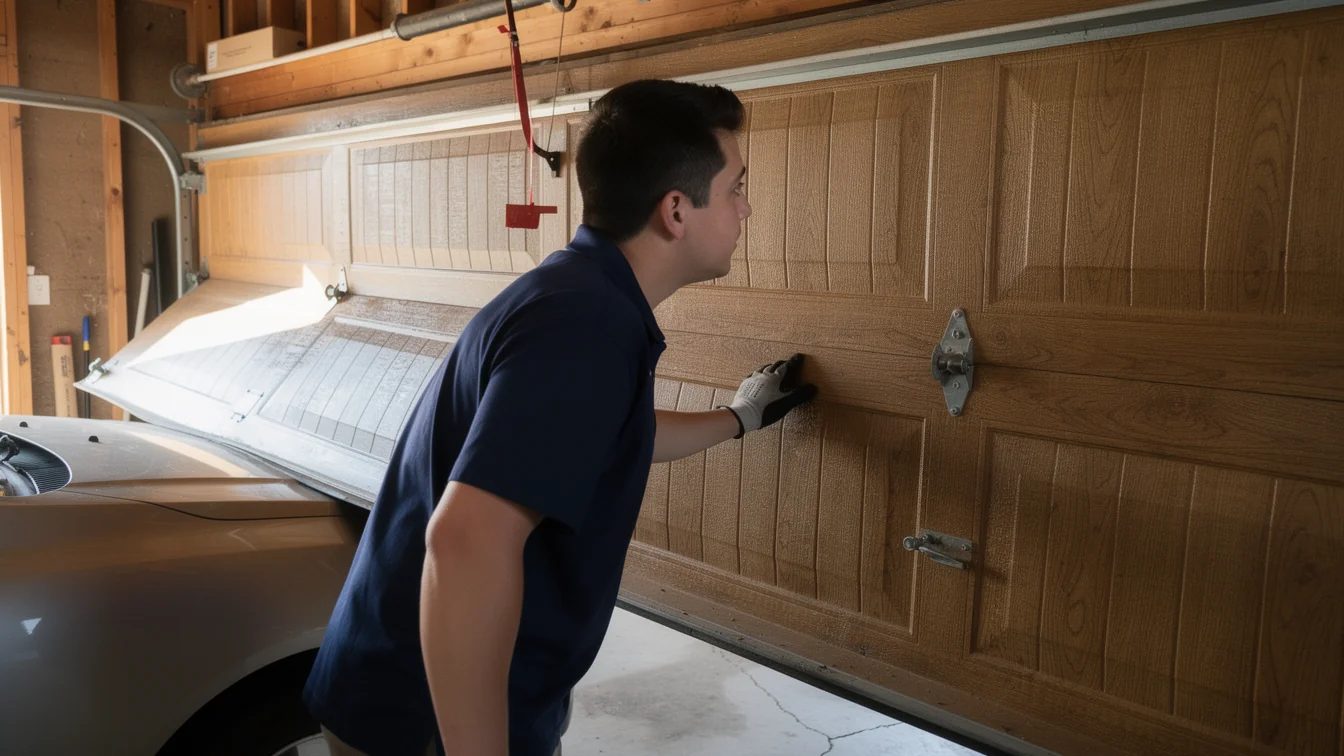
On older doors - again, the bulk of the stock here was built in the 1980s and 90s across the area's established neighborhoods - the weatherstripping at the bottom panel has usually hardened past the point of sealing anything. That doesn't make noise exactly, but it changes how the door sits when it closes, which puts uneven pressure on the bottom roller and accelerates the wear that does make noise. We see this pattern enough in this service area that it's worth checking even if nothing sounds wrong yet.
How we work
The Problem
The honest problem with garage door noise is that most homeowners wait for it to get worse, and by the time it's loud enough to notice, the part causing it has usually been failing quietly for months. With household incomes in this area running a median of $87,150 and a mix of owner-occupied houses that skews toward the 1980s-90s build era, we see a lot of doors that were well-built originally but have never had the hardware touched since.
One limitation worth saying plainly: if your opener is original to a house built in the earlier part of that 1967-2013 range, parts for it may not exist anymore. At that point we're not chasing a noise, we're replacing a unit, and no amount of diagnosing changes that math. We'd rather tell you that up front than keep adjusting a gear that's already done.
Questions
Common questions
My garage door squeals every time it opens - is that urgent?
Usually not urgent, but worth addressing. A squeal almost always means dry rollers or hinges, which is common on doors from the area's 1980s-90s housing stock that haven't been lubricated in years. Left alone, the dry metal wears faster and can turn into a roller replacement instead of a five-minute fix.
Why does my door seem louder in winter?
Fayetteville's cold-moderate climate puts the garage through real freeze-thaw swings each day in winter. Grease in torsion springs and opener gears thickens in the cold, which makes everything run stiffer and noisier until the door warms up during the day.
Is a grinding opener the same problem as a grinding track?
No. A grinding opener points to worn gears inside the motor housing - annoying but not dangerous. A grinding track usually means a bent rail or a roller riding off-center, which can let the door jump its track under load. Stop using the door if you hear the second one.
Do you give prices over the phone?
Not for spring or opener work. Sizing and setup vary enough across the area's housing, from 1960s original installs to newer construction, that a phone estimate risks being wrong in either direction. We quote after we've seen the door.
Recommendation
You Might Also Like
More garage door guides for Fayetteville homeowners.
What a Service Call Covers in Fayetteville
A breakdown of what a Fayetteville Garage Door Pros service call covers, built around this area's 1980s-90s housing stock and cold-climate wear patterns.
 When a Spring Lets Go in Cold Weather
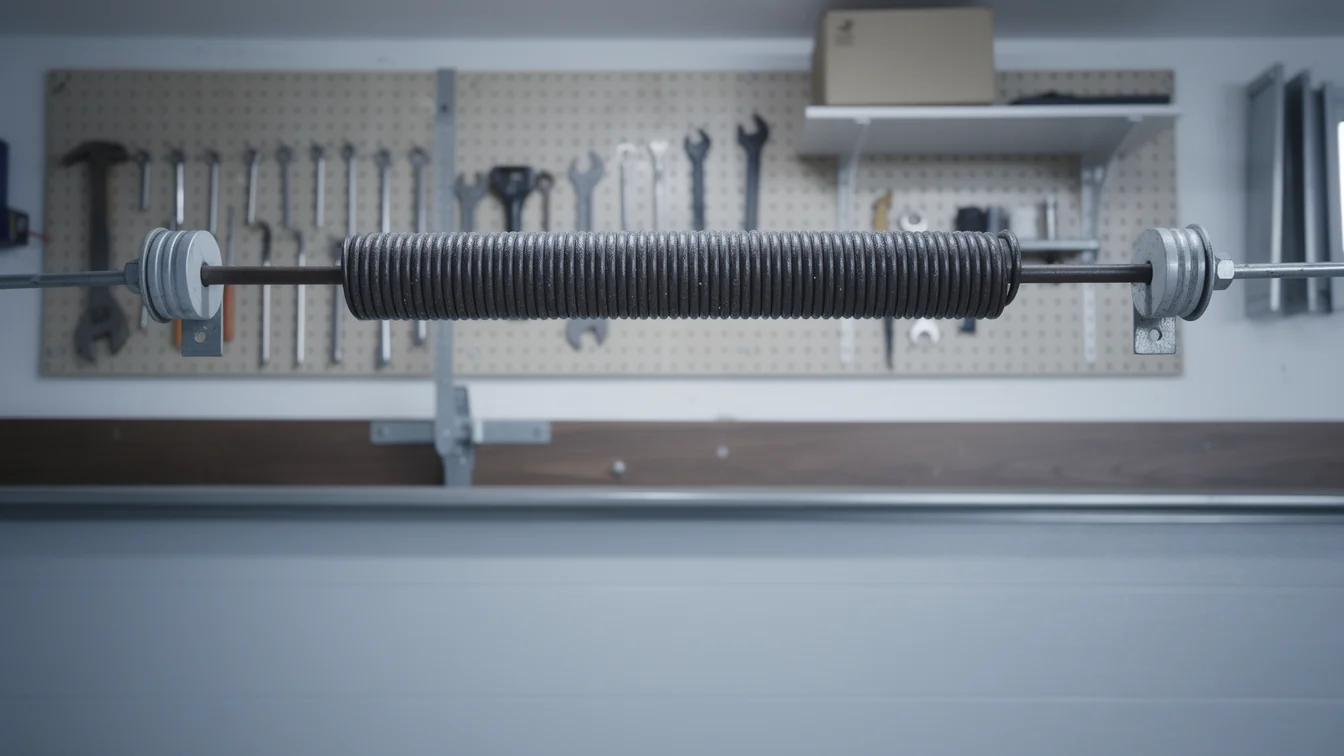
Why torsion springs snap in Fayetteville's cold snaps, what it costs to fix, and why the area's 1980s-90s housing stock makes this failure so common here.
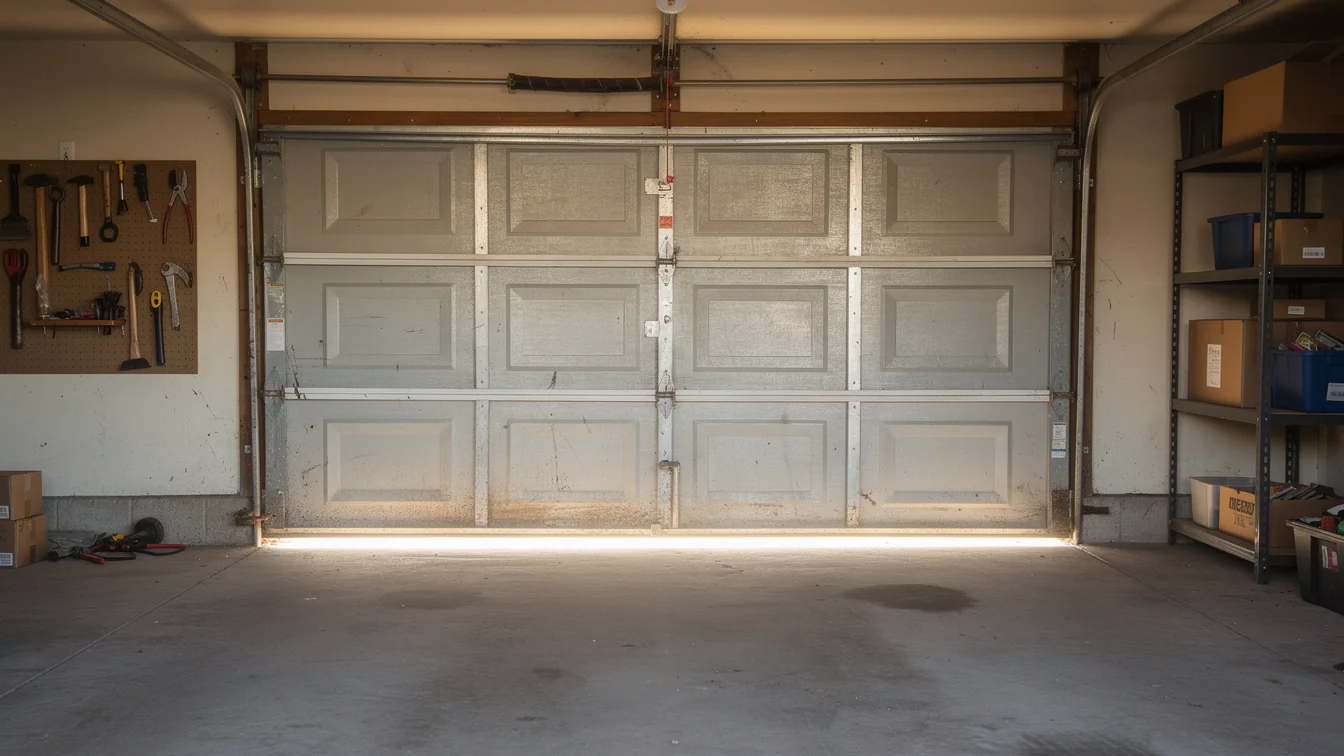 Garage Doors on Houses Built Before Insulation Rules
In Fayetteville's 1980s-90s housing wave, original garage doors predate insulation standards.
Ready when you are
Need a garage door sorted in Fayetteville?
Fayetteville Garage Door Pros repairs and installs garage doors, springs and openers in Fayetteville, AR and the surrounding area.