How We Fix It
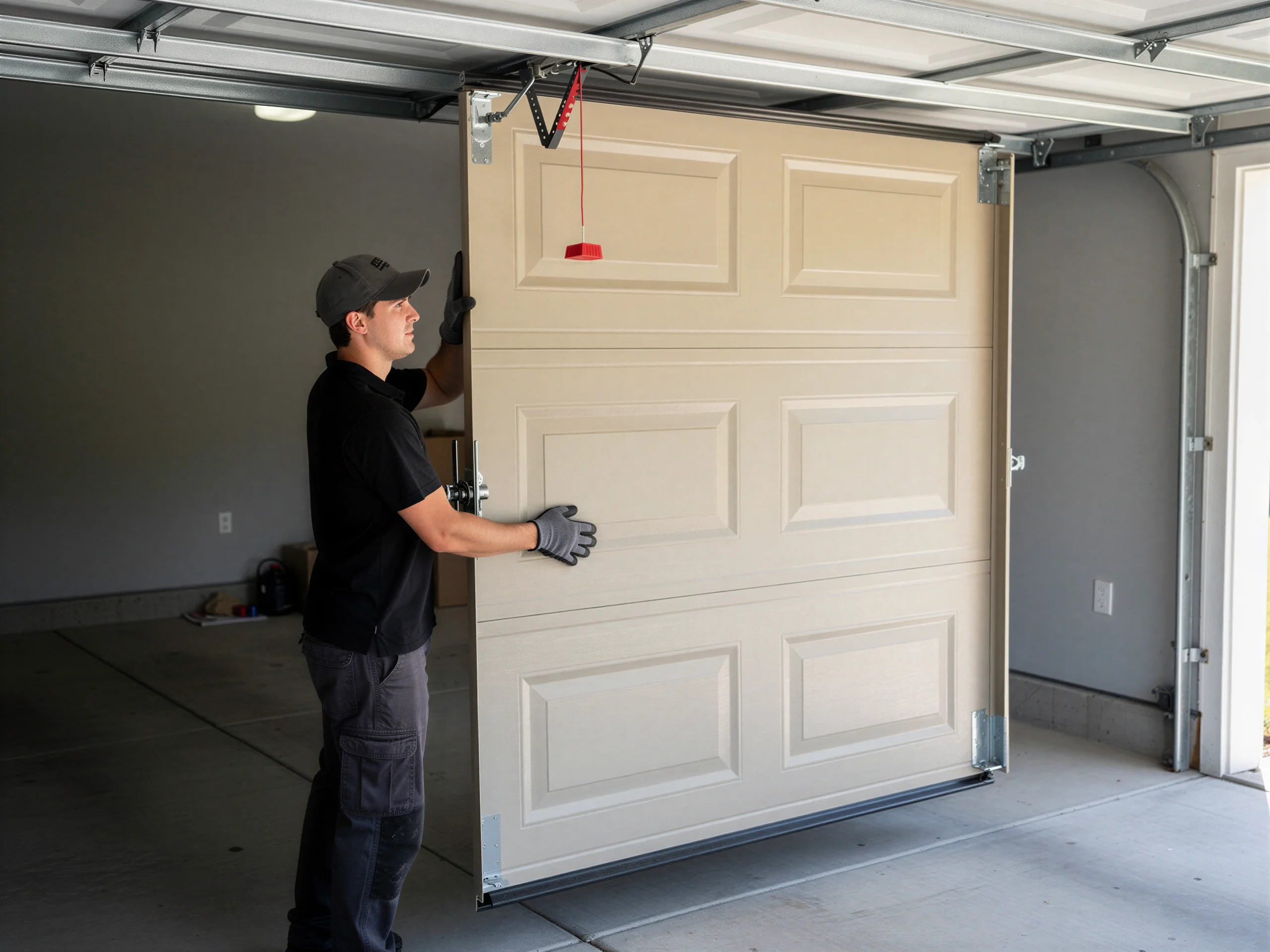
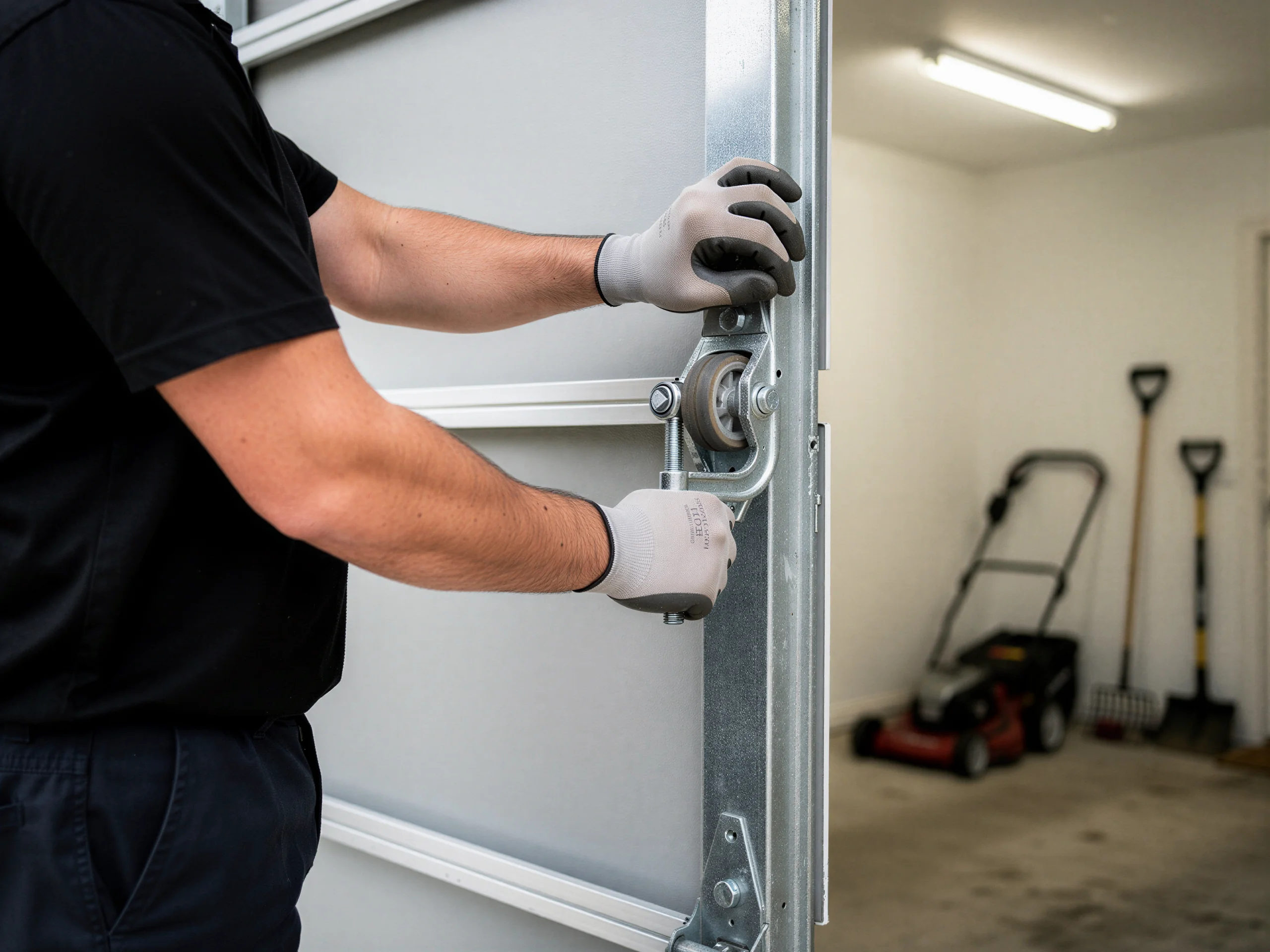
A roller job starts with the door unplugged from the opener and clamped so it can't fall while the springs are still under tension. We pull the hinges on one side at a time, working top to bottom, so the door stays aligned in the track instead of racking sideways.
Nylon sealed-bearing upgrade
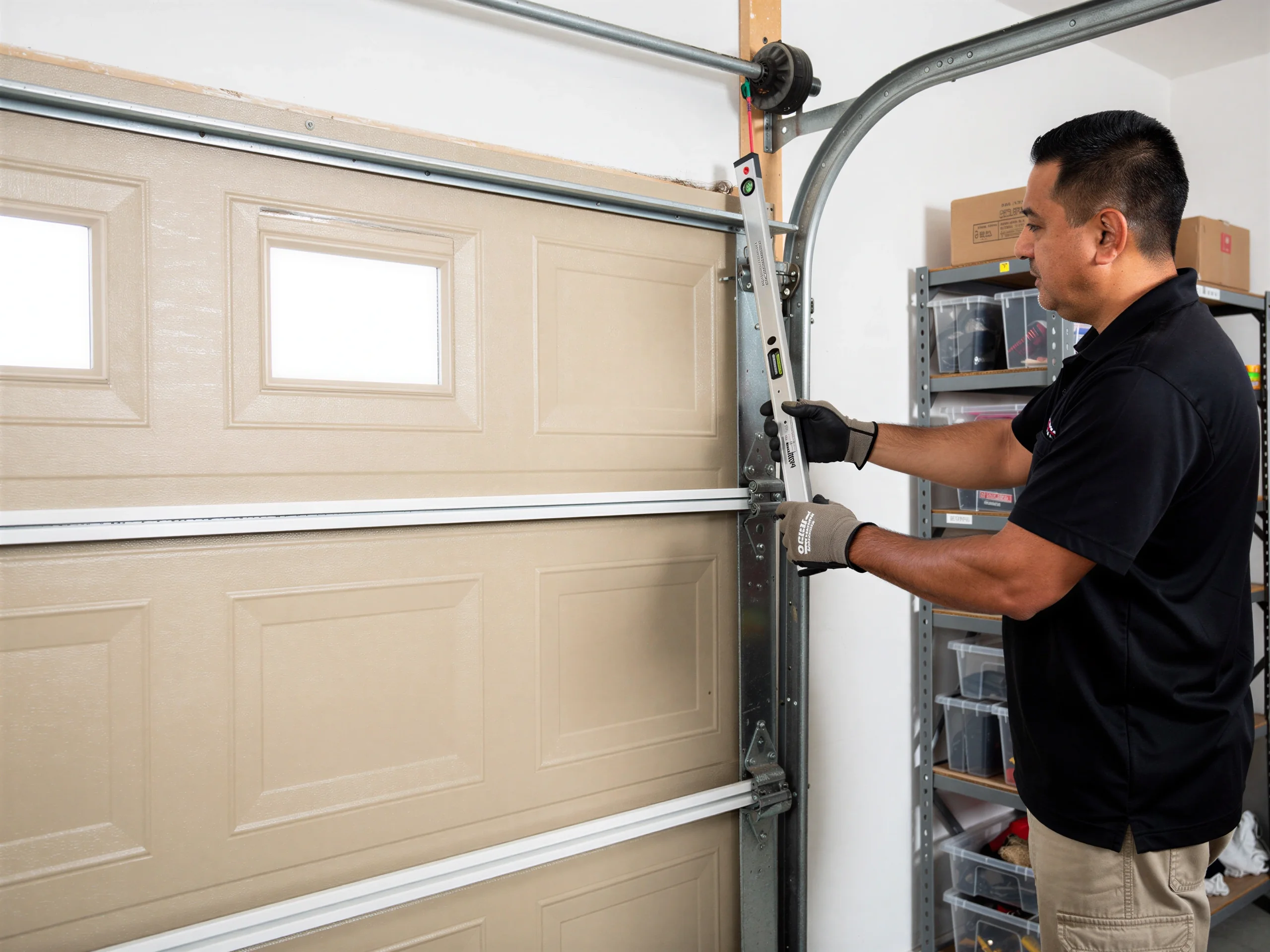
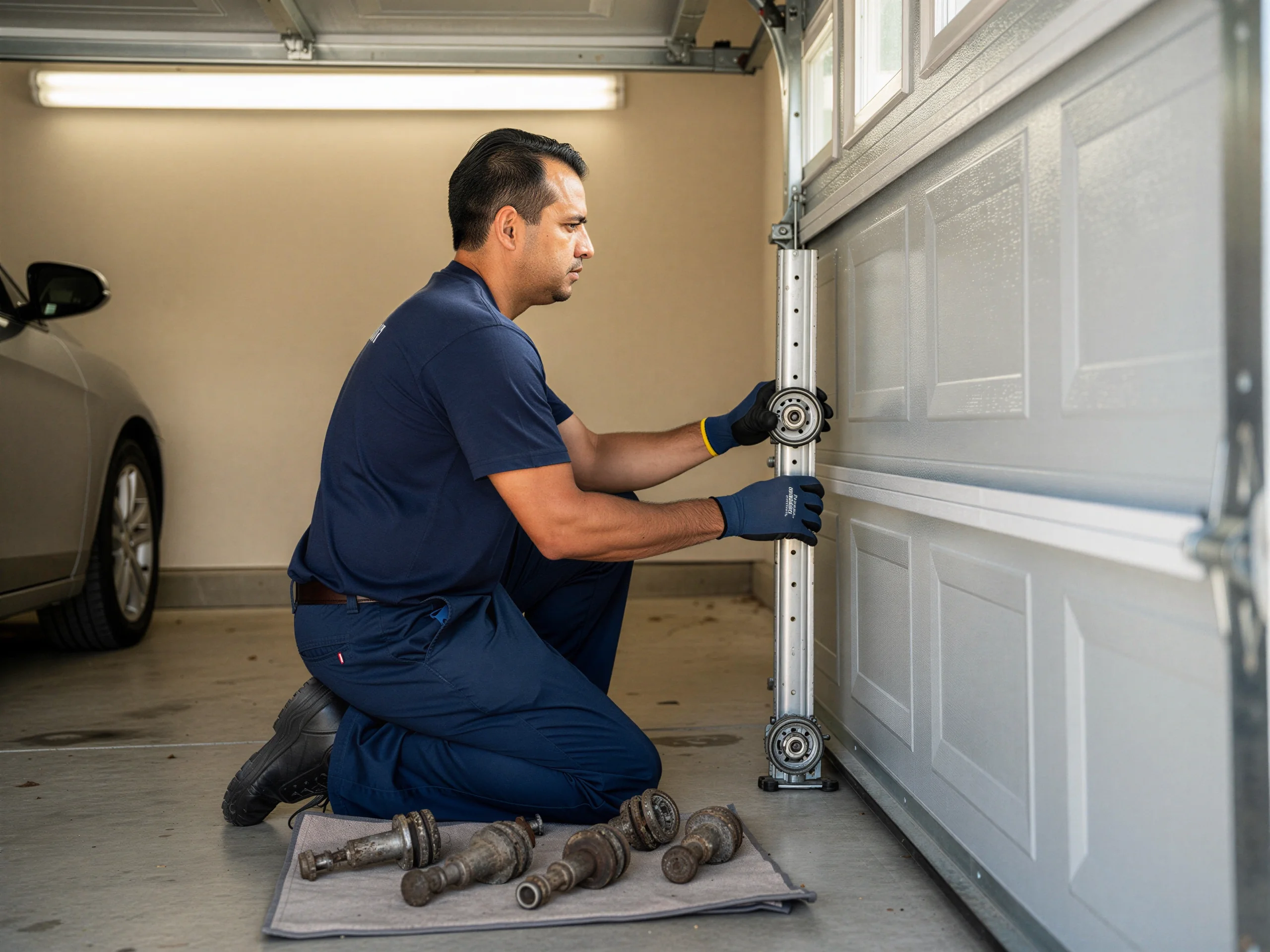
Old steel rollers with worn stems get swapped for sealed-bearing nylon rollers, which run quieter and don't need the oiling that steel rollers do. While the roller is out of the track we check the track itself for flare or dents, because a bent track will chew through a brand-new roller just as fast as it chewed through the old one.
Track checked before rollers
If a section of track is bowed, that gets straightened or replaced before the new roller goes in - putting a good roller in a bad track is a callback waiting to happen. We also check the hinge holes the roller stem rides in.
Stretched hinge holes
On older doors those holes stretch out from years of a worn roller wobbling in them, and a new roller in a stretched hinge will start wobbling again within months. If the hinge is shot, we replace the hinge, not just the roller. That's the one place we won't cut a corner to save a homeowner a few dollars on the invoice, because it just means a second visit.
What Causes It Around Here
Housing across the service area mostly went up between 1967 and 2013, with the bulk of it dating to the 1980s and 90s across the 15 communities we cover. Doors installed during that build-out are now 25 to 45 years old, and the original steel rollers on those doors have long since worn past their stem tolerance - that's the single biggest reason roller replacement calls cluster in neighborhoods from that era rather than in newer construction.
Climate plays a part too. This area sits in a cold, moderate band, which means real freeze-thaw cycles every winter. Moisture gets into the roller bearing, freezes, expands, and pits the bearing surface - you hear it before you see it, as a rough grinding instead of a smooth roll. Steel rollers take that abuse worse than nylon ones, which is part of why we don't put steel back in when we replace a roller.
We see this across the whole service area, not just inside city limits - the same 1980s-90s housing stock runs out through Johnson, Farmington, Greenland, and the other towns we reach from here, so the pattern holds wherever that building era shows up.
How It Shows Up
The first sign is usually noise - a grinding or clunking as the door moves, worse at the top or bottom of travel where the roller takes the most load going around the curve into the horizontal track.
Binding roller stems
Some owners notice the door catching or jerking instead of gliding, which is the roller stem starting to bind in a worn hinge hole. Later on you'll see it rather than just hear it: a roller sitting crooked in the track, a flat spot worn into the roller wheel, or the door hanging slightly out of square when it's down.
Grinding on flared track
By that point the roller has usually been grinding against a bent or flared section of track for a while, which is why we check the whole track run and not just the roller that's failing.
Partial roller replacement
One thing worth saying plainly: if every roller on the door is original and worn evenly, replacing just the one that's loudest is a short-term fix. We'll tell you when it makes more sense to do the full set at once rather than coming back in six months for the next one.
Getting It Booked In
We work across the service area - roughly 22,268 households and about 14,904 owner-occupied houses - and the roller job itself is usually a same-visit repair once we're on site, not a tear-down of the whole door. You can get started from the home page.
We don't carry every roller style on the truck for every door brand, so on an older or less common door there can be a short wait on the exact part. We'd rather tell you that up front than promise a same-day fix we can't back up.
Talk to a local pro
Garage door service in Fayetteville?
Same-day service with honest, upfront quotes.