What Can Go Wrong
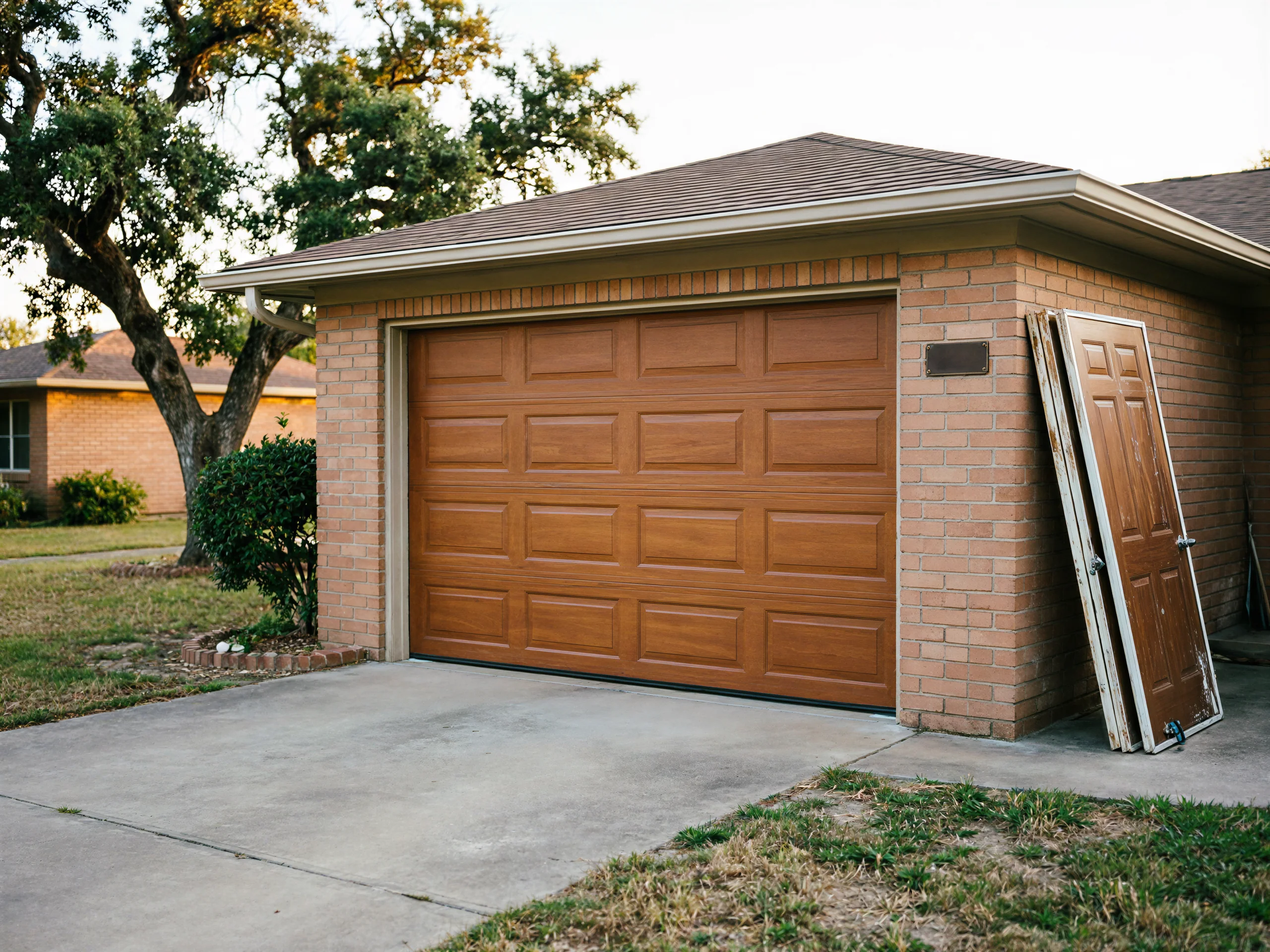
Farmington sits right on the median for the whole service area we cover from Fayetteville: a 1998 build year. That's not an accident of averaging - it means most garage doors in Farmington came in during the same narrow stretch of construction, rather than spanning the full 1967-to-2013 range you'd find scattered across the rest of the area.
Neighbor failures cluster
The practical effect is that one failure here tends to show up in a neighbor's door within a year or two, because the springs, the rollers, and the opener gear sets are all aging on roughly the same clock.
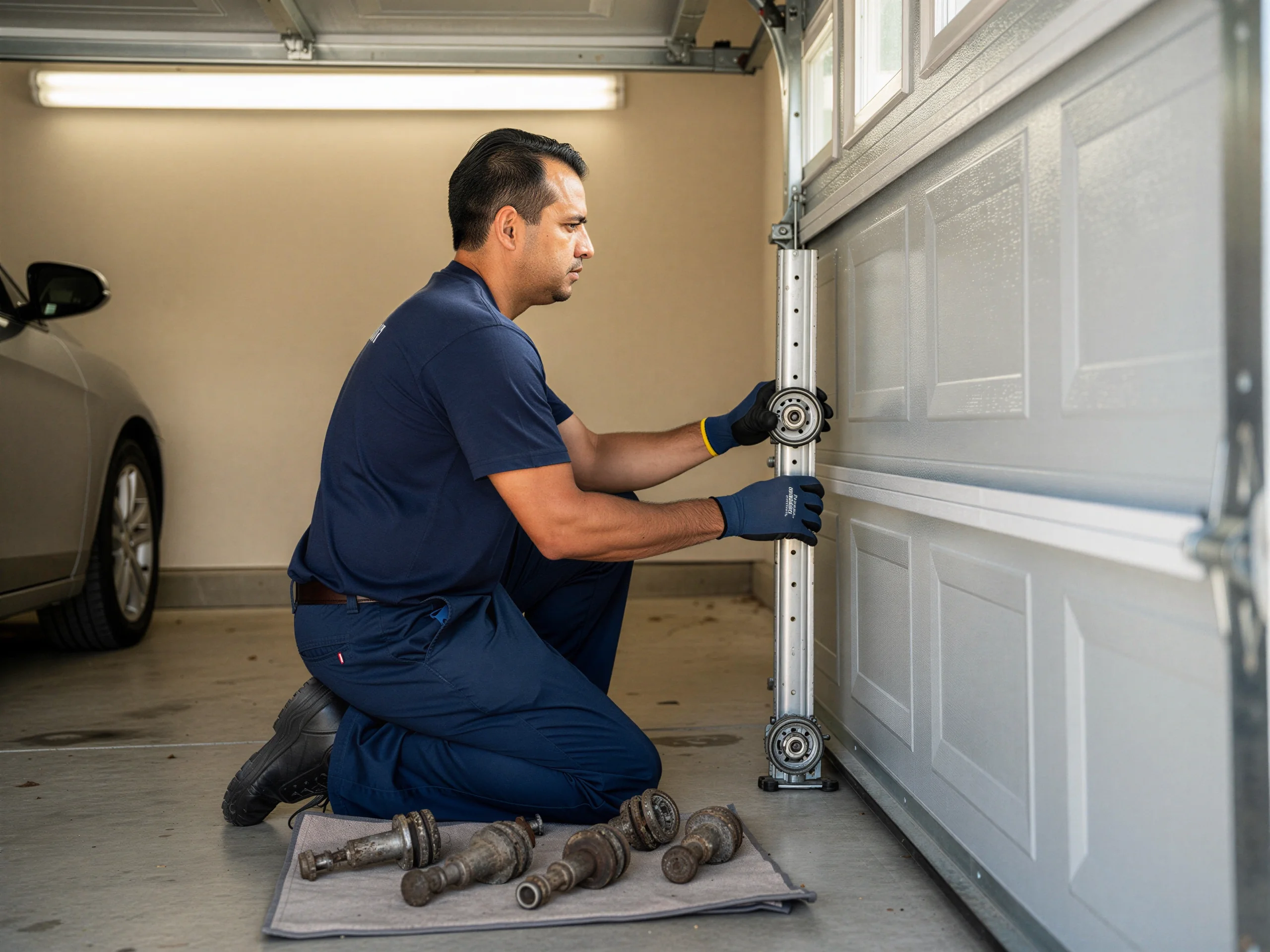
Late-90s springs wearing out
Torsion springs rated for the mid-to-late 90s install are hitting the end of their cycle count in bunches right now. Extension springs on older setups are rarer here than elsewhere, but you'll still find a few on homes near the edge of the build window.
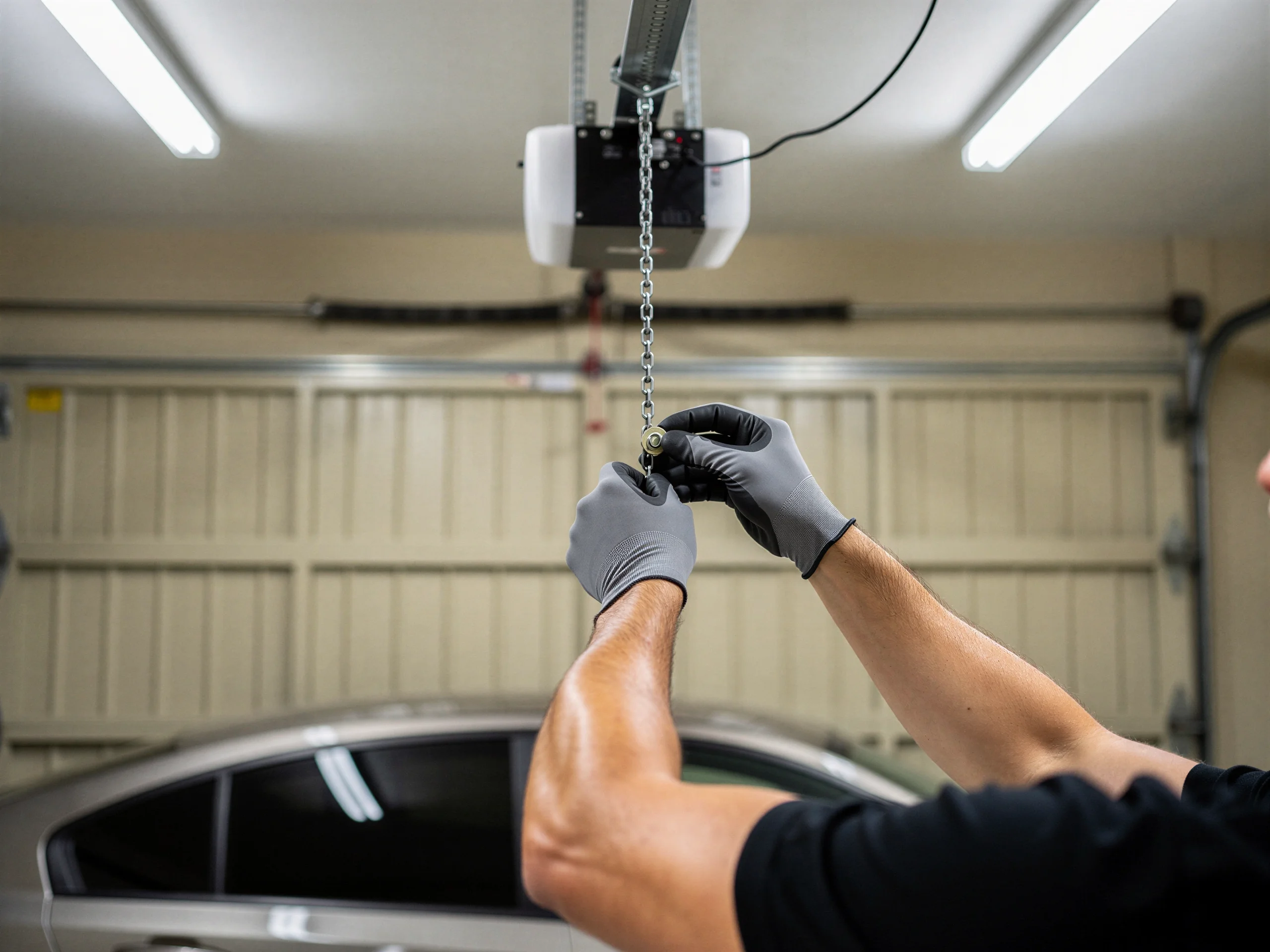
Original chain-drive openers
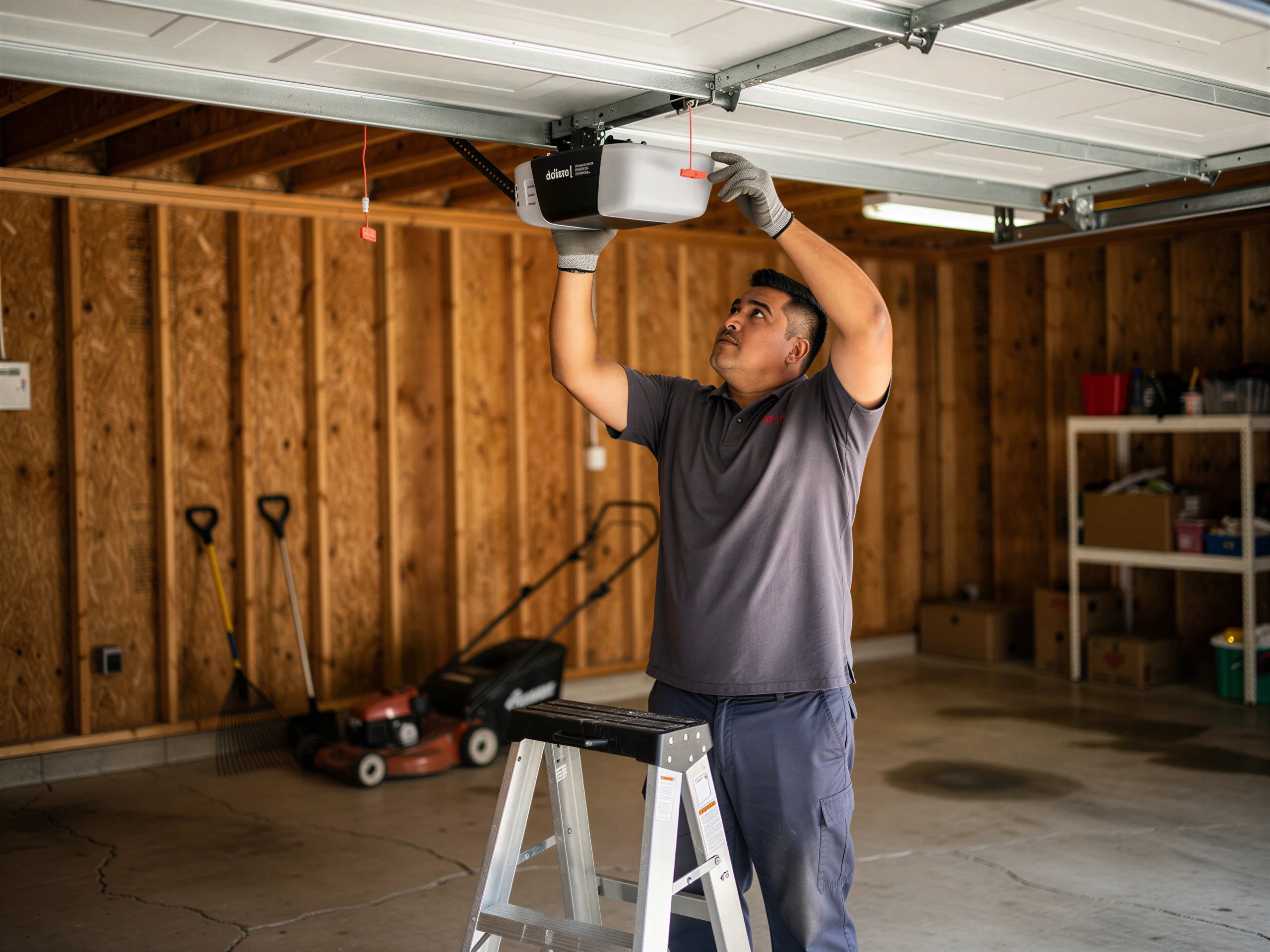
Openers from that era, if they're original, are chain-drive units with worn sprockets and control boards that don't talk to modern safety sensors cleanly. We don't guess at what's inside a door before we see it, but knowing the build year narrows the list fast, and that's worth something when a spring lets go on a Saturday.
Getting It Booked In
We run this job from Fayetteville, about 5 miles out, so there's no local branch or drop-in counter in Farmington itself - we load the truck and come to you.
Pre-visit phone questions
That means we ask a few more questions on the phone before we head over: what the door's doing (won't open, won't close, makes noise, opener runs but door doesn't move), roughly how old the opener is if you know it, and whether the spring is visibly broken or just sounds off.
Avoid second trips
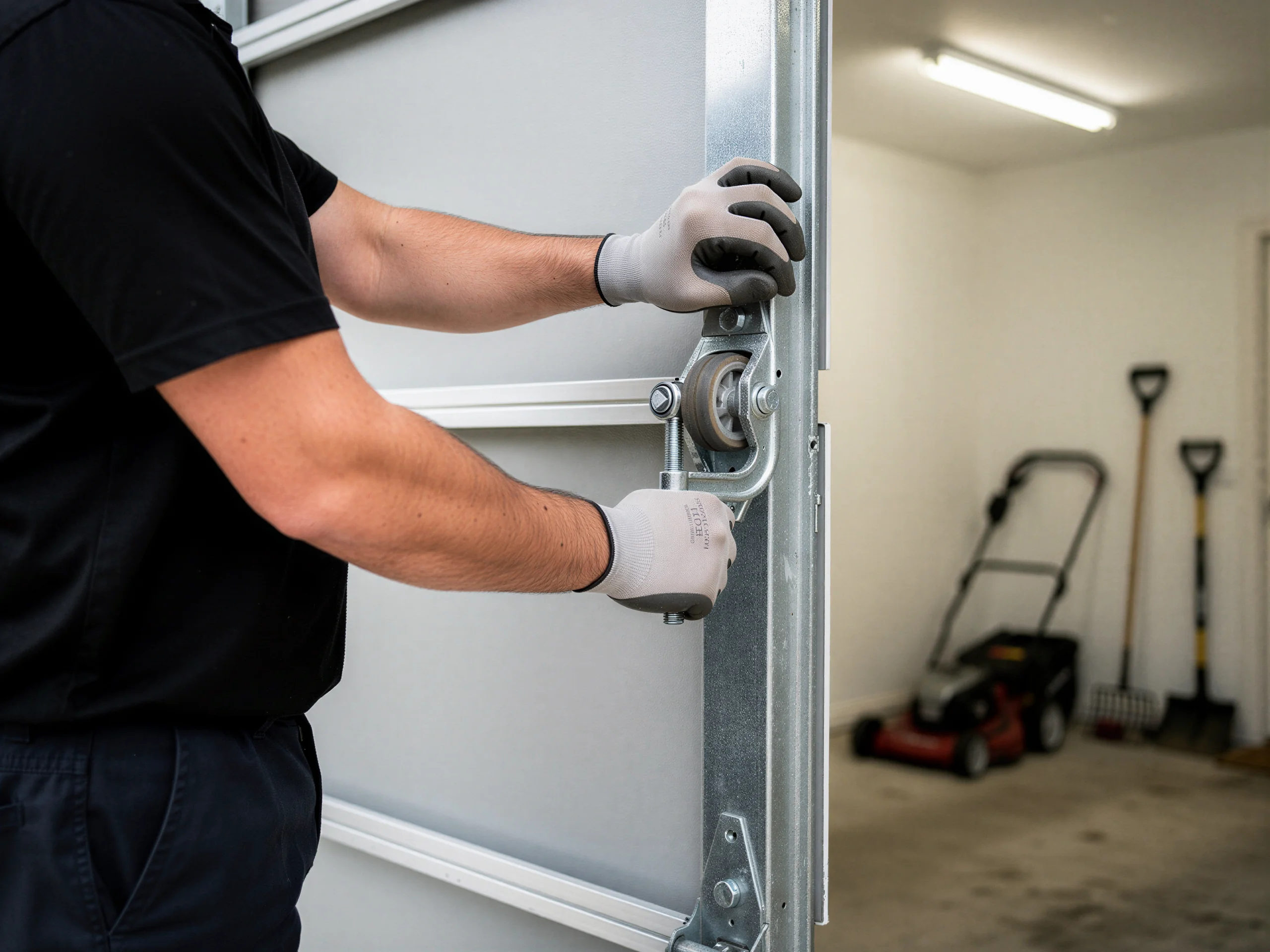
Those answers let us bring the right spring size and the right mounting hardware for a torsion setup instead of showing up and having to turn around for a part. We don't quote a fixed response window here because travel time and the rest of the day's jobs both factor in, and promising a number we can't guarantee helps nobody.
Known local build era
What we can tell you is that a 1998-era door in Farmington is a known quantity for us before the truck leaves Fayetteville, which saves a second trip more often than not.
Parts We Carry
Because Farmington's housing stock bunches around 1998, and sits inside the broader 1980s-to-90s cluster that covers most of the 15 named areas in this service territory, the springs and openers we stock on the truck are picked to match that window first. That's torsion spring stock sized for standard 7-foot and 8-foot double doors with steel torsion tube hardware, the rollers and hinges that era used, and chain-drive opener parts - sprockets, drive gears, logic boards - for the openers that were common when these houses went up. We carry less extension-spring stock than a company working an older neighborhood would need, simply because fewer Farmington doors use that setup. If your house falls outside that window - older or much newer - we still carry a general range of torsion and extension hardware, but a part from the 1970s or a smart-opener board from the last few years is more likely to need an order, and we'll tell you that up front rather than make you wait at the door.
How It Shows Up
Cold snaps are the trigger we see most in homes built in this window. The service area sits in a cold-moderate climate band, and steel springs lose a measurable amount of tension capacity when temperatures drop hard overnight - a spring that was already near the end of its cycle count often picks that night to go.
Bang and stall symptoms
You'll hear a bang from the garage, or the door will stop halfway and refuse to move either direction. A second pattern specific to 1990s-era chain-drive openers: the door opens fine but closes only partway before reversing, which usually means the close-limit setting has drifted or the safety sensor alignment has shifted with age, not that the spring's at fault.
Gradual noise pattern
Noise that's gotten steadily louder over months, rather than a sudden bang, usually points to rollers or hinges wearing out rather than a spring failure. Knowing which of these you've got before we arrive - sudden versus gradual, full failure versus partial - helps us bring the right part the first time.
How We Fix It
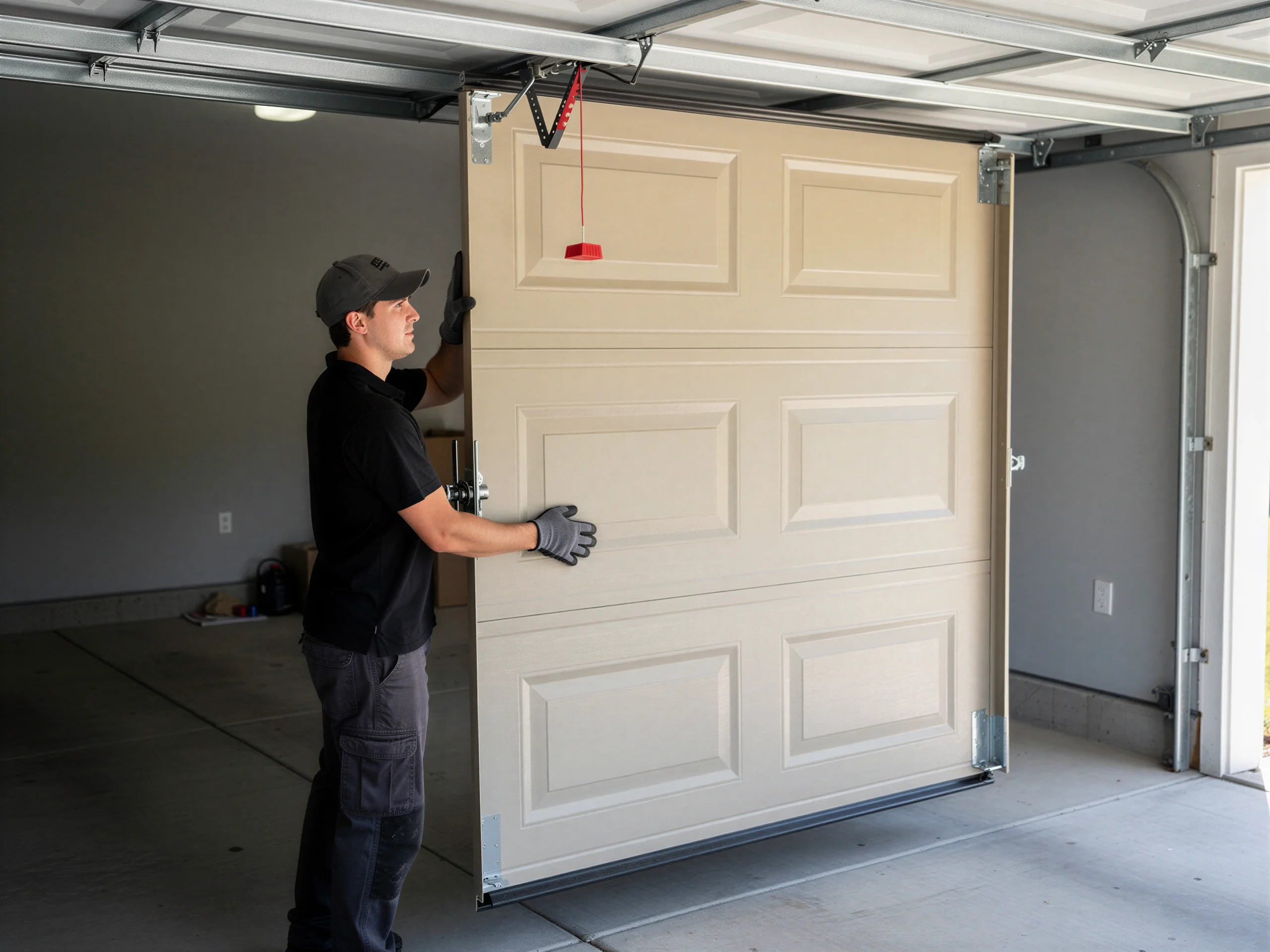
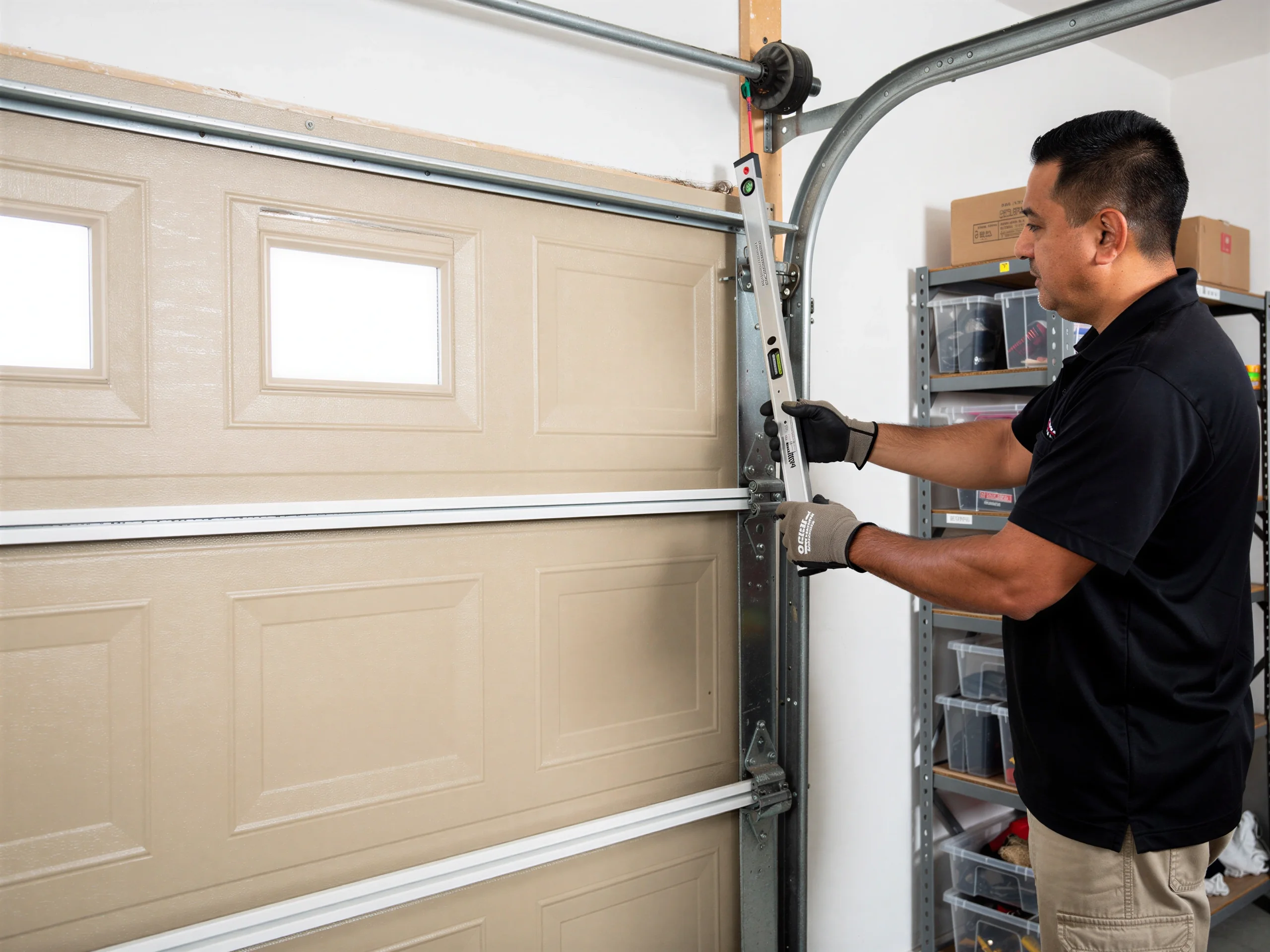
For a broken torsion spring on a door from this era, we replace the spring to match the door's weight and cycle rating rather than reusing hardware that's already fatigued - it's not worth the callback. Opener issues on 1990s chain-drive units usually come down to sensor alignment, limit adjustment, or a worn sprocket, and we handle all three on site. One honest limit: if the opener's control board itself has failed on an older unit, replacement parts for some discontinued boards aren't something we stock or can always source quickly, and at that point replacing the opener outright is usually the better call than waiting on a back-ordered board. We'll tell you when we're at that point rather than stall the job. Household income across the service area runs a little above $87,000, and in Farmington it's closer to $88,500, which is part of why we see more owners opt for a full opener swap with a quieter belt-drive unit instead of patching an aging chain-drive one - that's a choice we lay out, not one we push.
Talk to a local pro
Garage door service in Fayetteville?
Same-day service with honest, upfront quotes.