Parts We Carry
Elkins is a small town - about 1,270 households - so we don't keep a depot out there. We run parts out of Fayetteville, 9 miles up the road, and we stock what actually fails on doors built in this era.
Center-shaft torsion generation
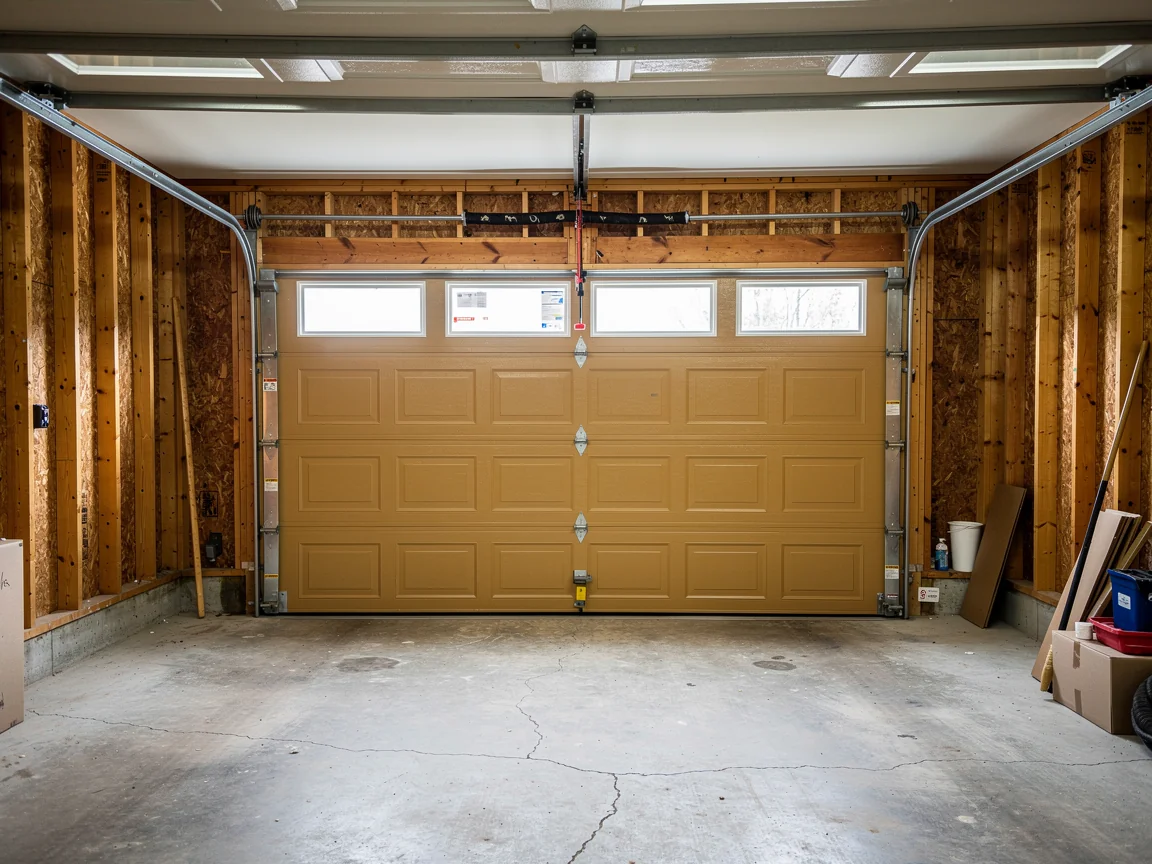
Most houses here went up around 2002, which puts them squarely in the steel sectional door generation: torsion springs mounted on a center shaft over the opening, not the old side-mounted extension springs you'd find on a door from the 1970s.
Spring sizing by weight
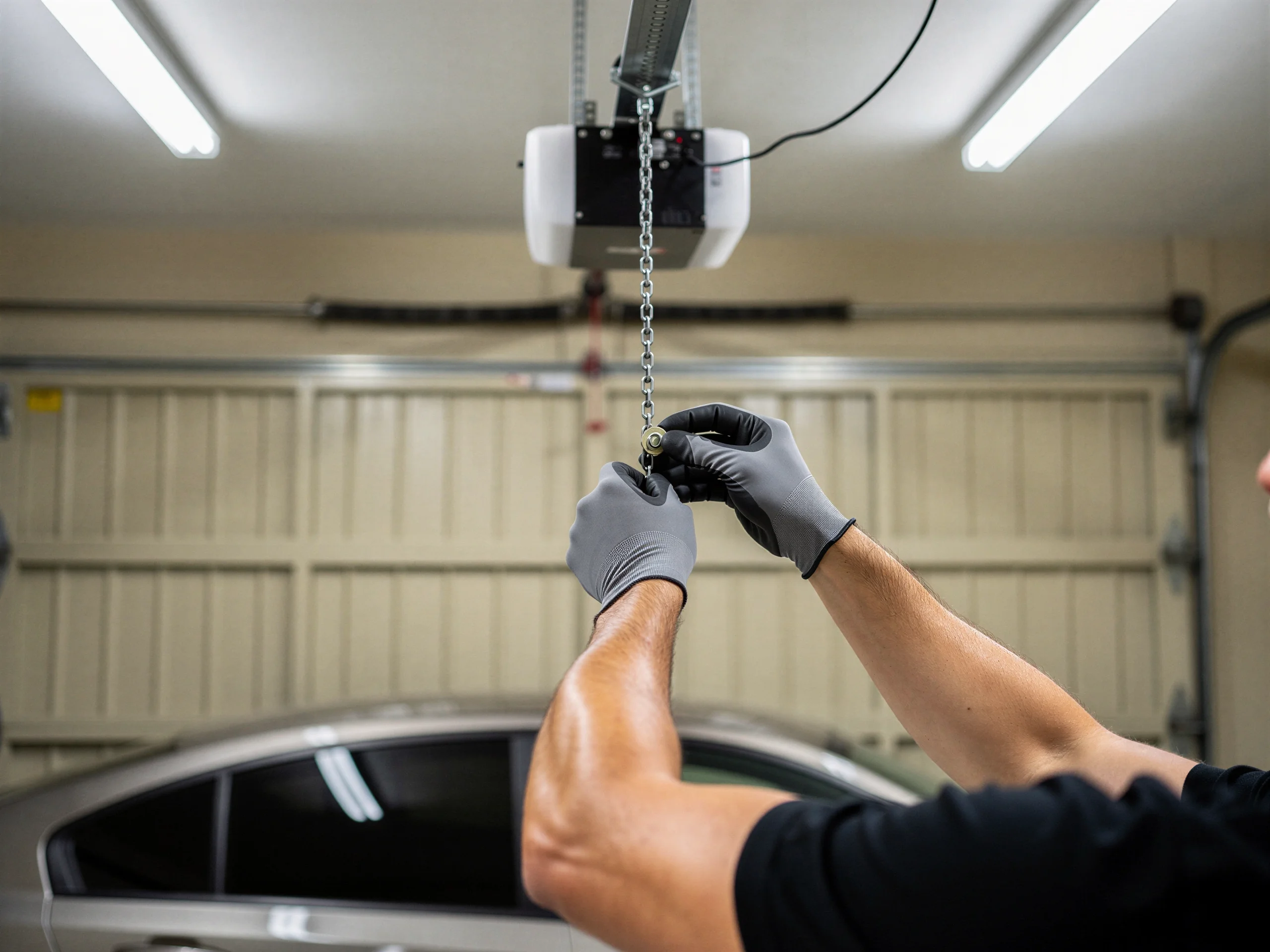
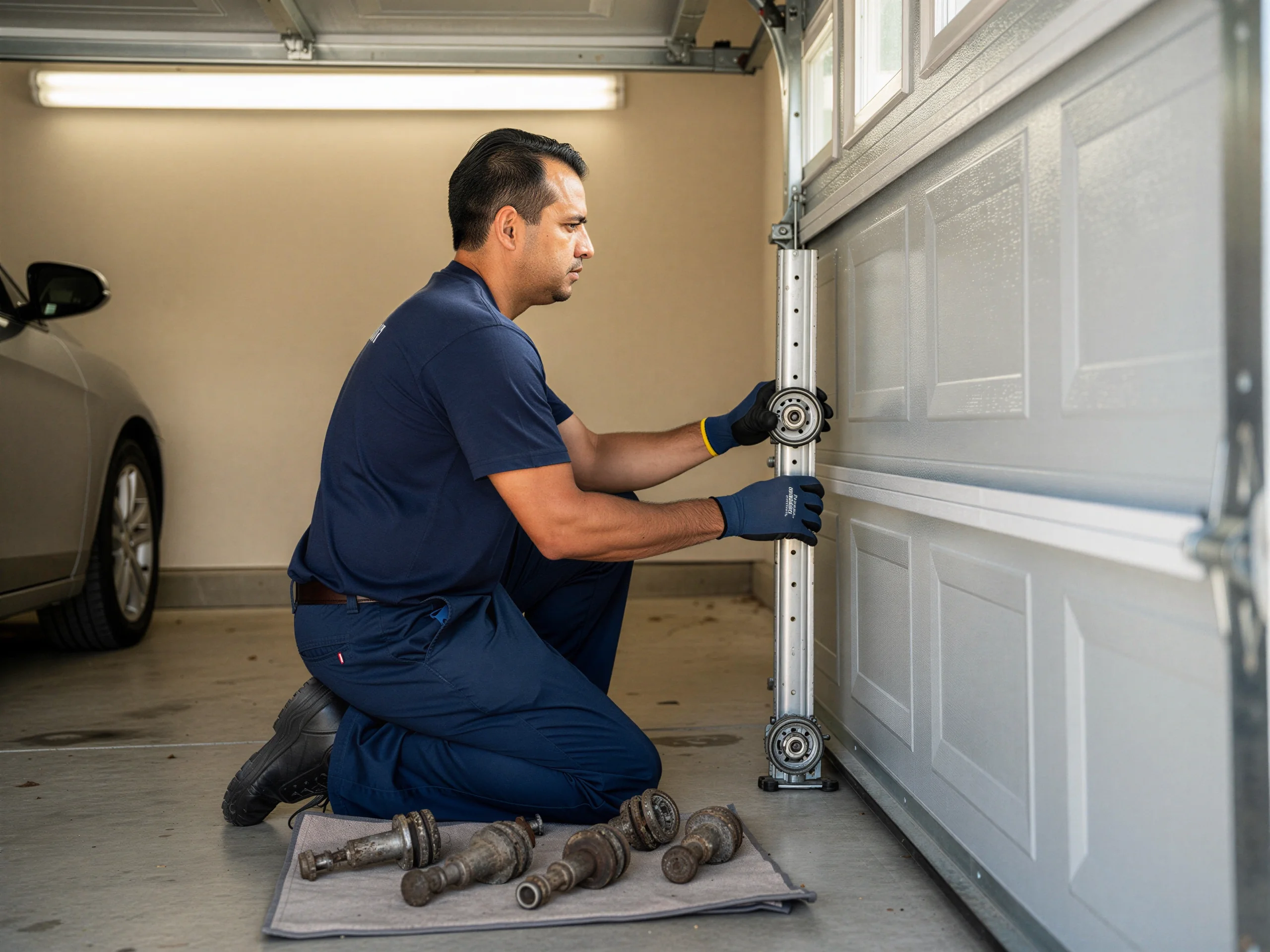
That matters because torsion spring sizing is specific to door weight and height, and we carry a working range of those rather than guessing on-site. We also carry standard-duty chain and belt drive openers, nylon and steel rollers, and the galvanized cable that runs those torsion systems.
Oversized and custom orders
What we don't stock is anything custom - oversized doors, obsolete opener control boards from a brand that's stopped making parts, or odd-width tracks. If your door falls into one of those categories, we'll tell you up front it may mean a special order, not a same-visit fix.
How We Fix It
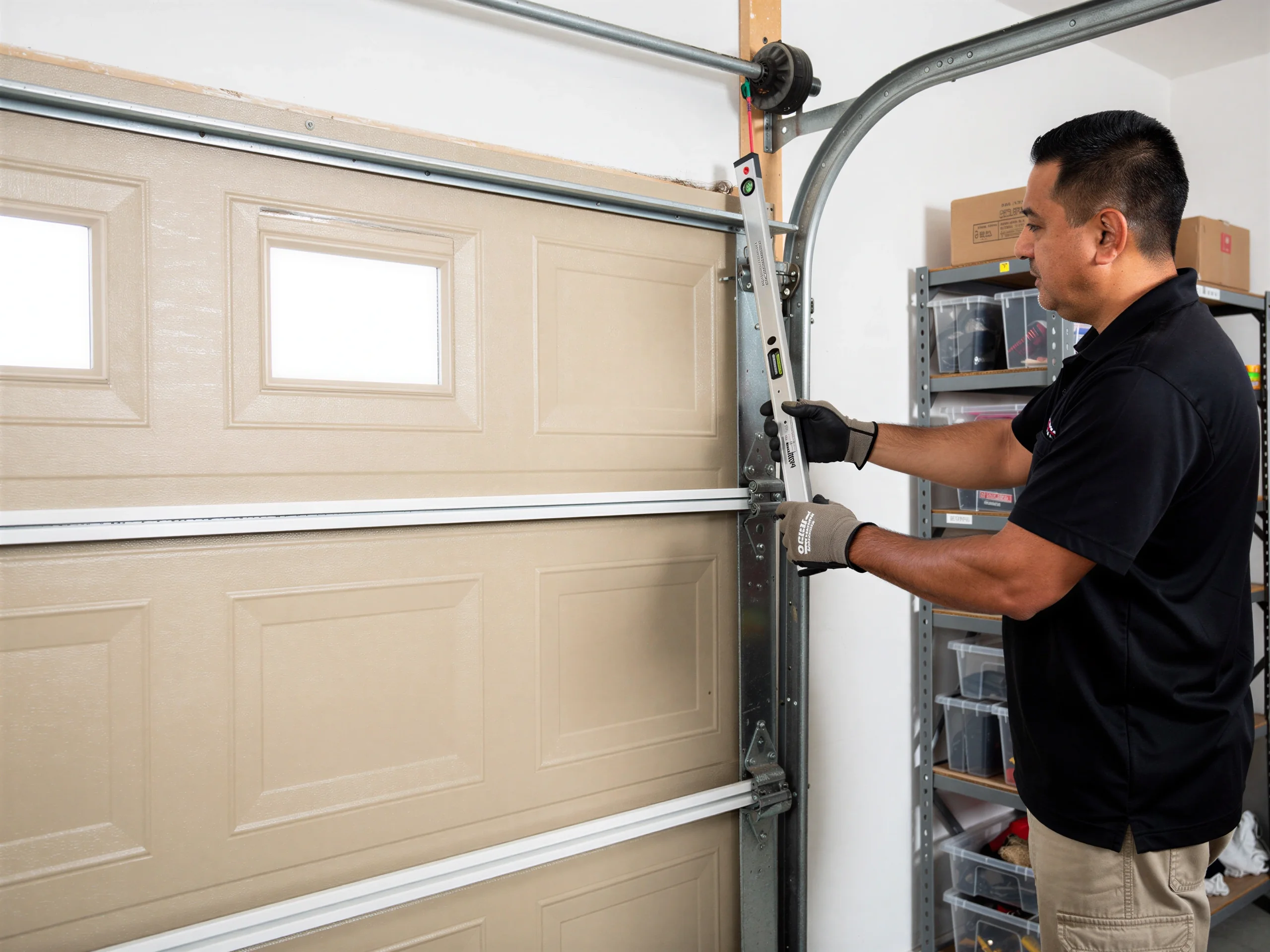
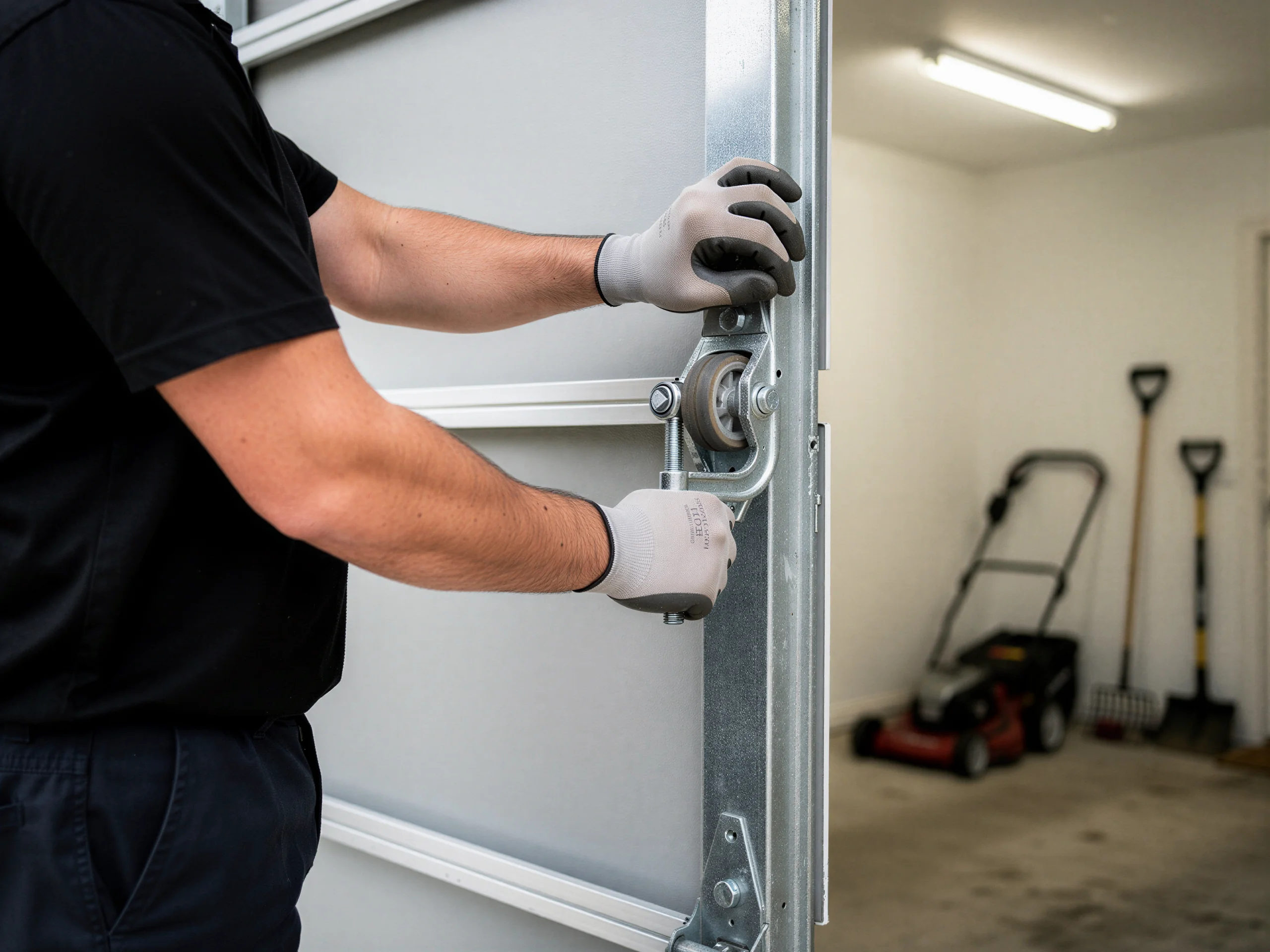
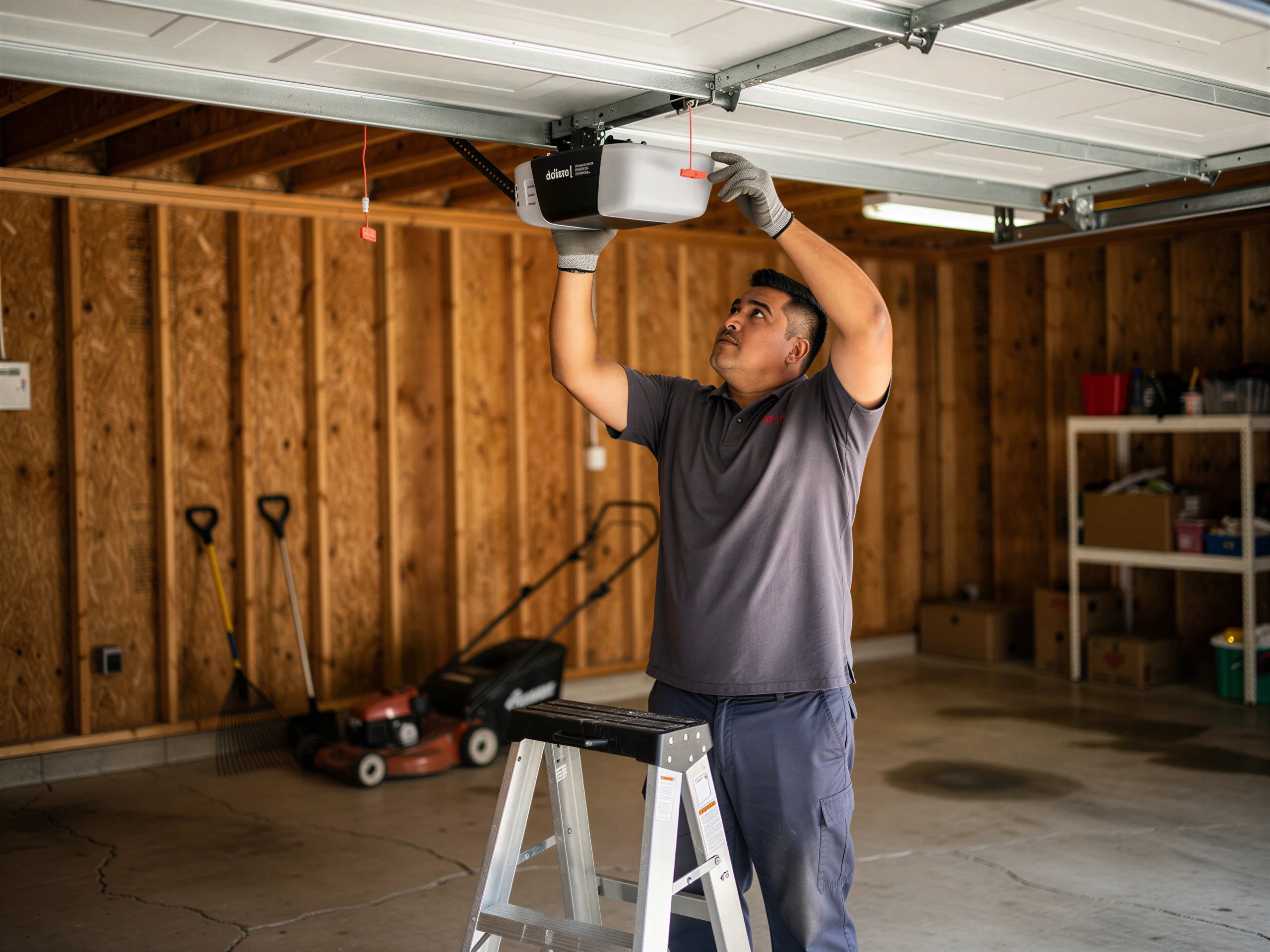
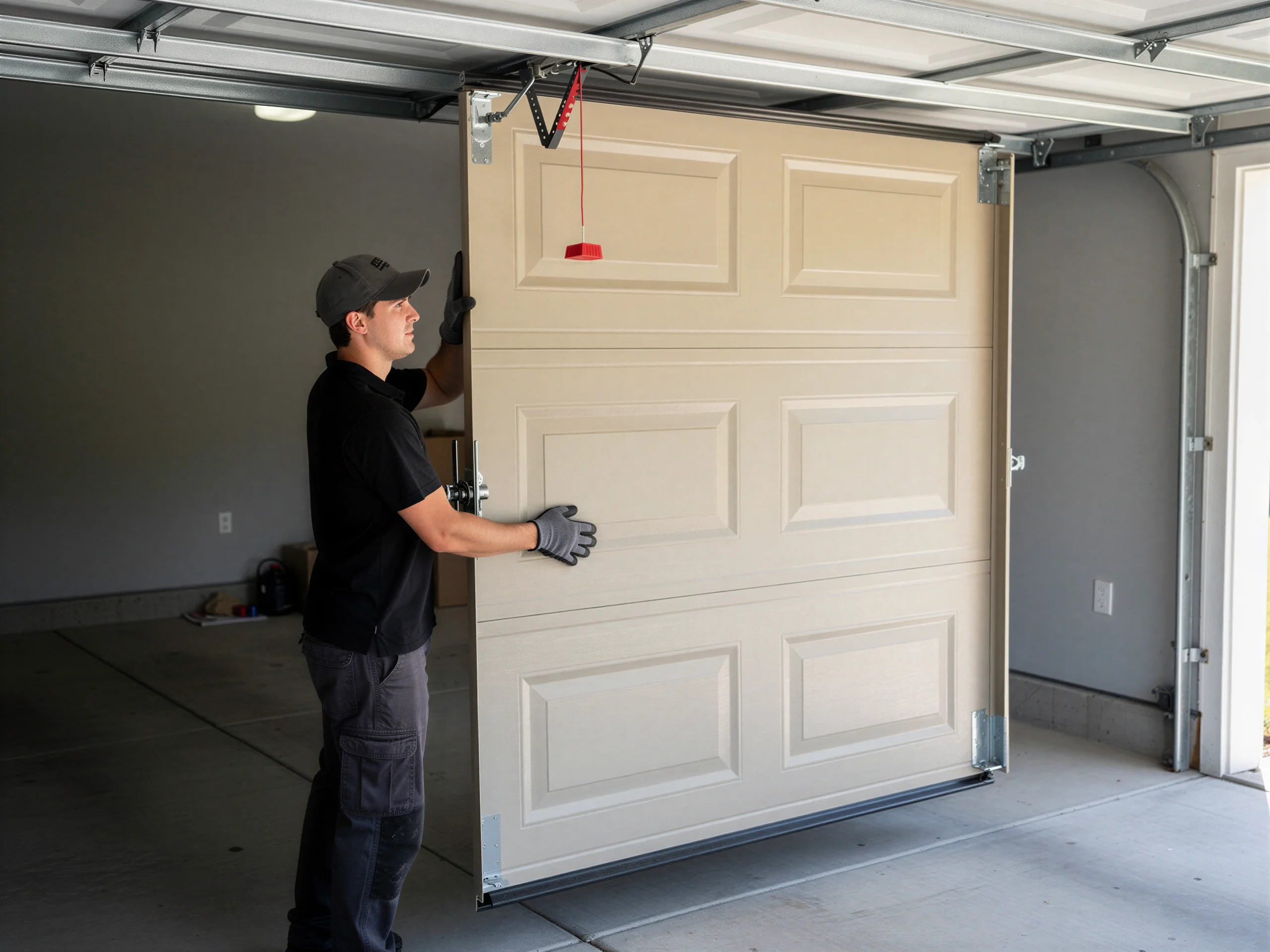
Every job in Elkins starts with the drive out from Fayetteville, so we try to diagnose as much as we can over the phone before the truck leaves - make and rough age of the opener, whether the door is stuck up, down, or crooked, whether springs look intact. That lets us bring the right spring size and the right hardware the first time instead of making a second trip. On site, the sequence is the same one we'd run anywhere: check spring tension and condition first, because a broken or over-fatigued spring is behind most door complaints, then check cable wear, then track alignment, then the opener itself - travel limits, force settings, safety sensors. We don't replace a part just because it's old; we replace it when it's measurably worn or already failed. A door that's merely stiff sometimes just needs the track cleaned and the hardware lubricated and tightened, which costs you a lot less than new springs. We'll show you what we found before we start swapping parts, not after.
Can You Do This Yourself
Some of it, yes. Vacuuming the tracks, wiping down and lubricating rollers and hinges with a garage-door-rated lubricant, and tightening loose mounting bolts are all reasonable owner maintenance, and doing them twice a year will cut down on the number of calls you need.
Spring work stays professional
What you shouldn't touch is anything involving the torsion spring itself - winding, unwinding, or replacing it. A torsion spring on a double door holds enough stored energy to break a wrist or worse if the winding bars slip, and the tools for doing it safely aren't something most households own. Cable work carries the same risk, since the cable and spring are part of the same loaded system.
Off-track and straining limits
If your door is off its track or the opener is straining and reversing, that's also past the DIY line - forcing it can bend the track or burn out the opener motor. Lubrication, bolt checks, and keeping the photo-eye sensors clean are fair game. Anything with the shaft, the spring, or the cable is a call.
What Causes It Around Here
The service area sits in a cold moderate climate band, which means real temperature swings through the winter and into early spring. Steel contracts in the cold, and a spring that's already near the end of its cycle life tends to show it first on a cold morning - slow to lift, or not lifting at all. Because most Elkins houses were built around 2002, a lot of the original torsion springs installed when those houses were new are now into their second decade, and spring steel has a working cycle life regardless of climate. That combination - original-install springs aging out, plus cold-weather stress on steel that's already fatigued - is the most common reason we get called out here. It's not a defect specific to any one brand of door; it's just time and temperature doing what they do to a loaded spring. Track misalignment from minor settling is the other recurring issue in newer-build homes, though it's less common than spring wear.
How It Shows Up
The door that used to lift smoothly starts to hesitate partway up, or the opener motor sounds like it's working harder than it used to - that's usually a spring losing tension, not an opener problem, even though the opener gets blamed first.
Uneven closing from cable
A door that closes unevenly, dropping faster on one side, points to a cable that's frayed or has jumped its drum. If the door reverses right after it touches the floor, or won't close at all and just goes back up, check the photo-eye sensors near the bottom of the tracks first - misalignment or a spider web across the beam causes this more often than people expect.
Bang then no movement
A loud bang followed by the door refusing to open at all is almost always a broken spring, and at that point the door is dangerous to force by hand.
Stuck open security issue
None of these are urgent emergencies in the sense of safety risk if you leave the door alone, but a door stuck open is a security issue, and a broken spring left on a door that's still being opened manually will wear the opener out fast.
Getting It Booked In
We cover Elkins from our Fayetteville base, about 9 miles away, so getting a job booked just means telling us what the door is doing and letting us plan the drive accordingly. With Elkins' income levels running a bit below the wider service area's median, we try to be upfront about repair versus replace costs before we commit you to either - a tune-up and spring swap is a different conversation than a full door replacement, and we won't push the bigger job if the smaller one solves it. For more on how we handle service across the towns around Elkins, see our nearby areas page, and for the full rundown of what we do out of Fayetteville itself, the Fayetteville garage door service page has that detail.
Talk to a local pro
Garage door service in Fayetteville?
Same-day service with honest, upfront quotes.