Parts We Carry
Elkins sits about 9 miles out from our shop in Fayetteville, and that drive shapes how we stock the truck before we ever turn onto the highway.
Post-2000 spring weights
Homes here mostly went up around 2002, well after the older stock closer to Fayetteville that averages out to 1998 and stretches back to 1967. That later build year means we're loading torsion springs sized for post-2000 door weights and opener logic boards built for the circuit boards that shipped from the late 90s through the 2000s, not the older relay-style units you still find on the oldest Fayetteville-area houses.
Common wear parts stocked
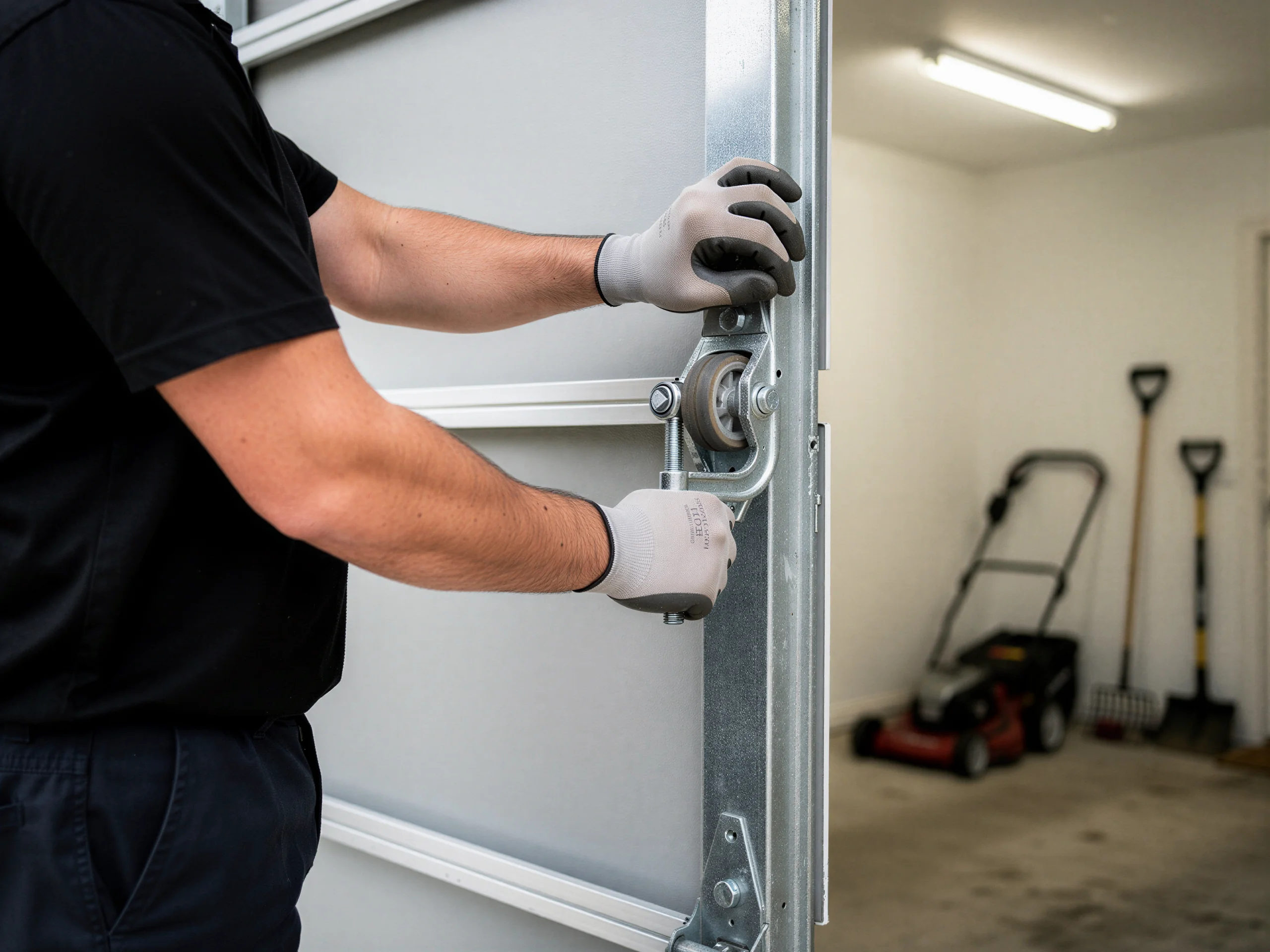
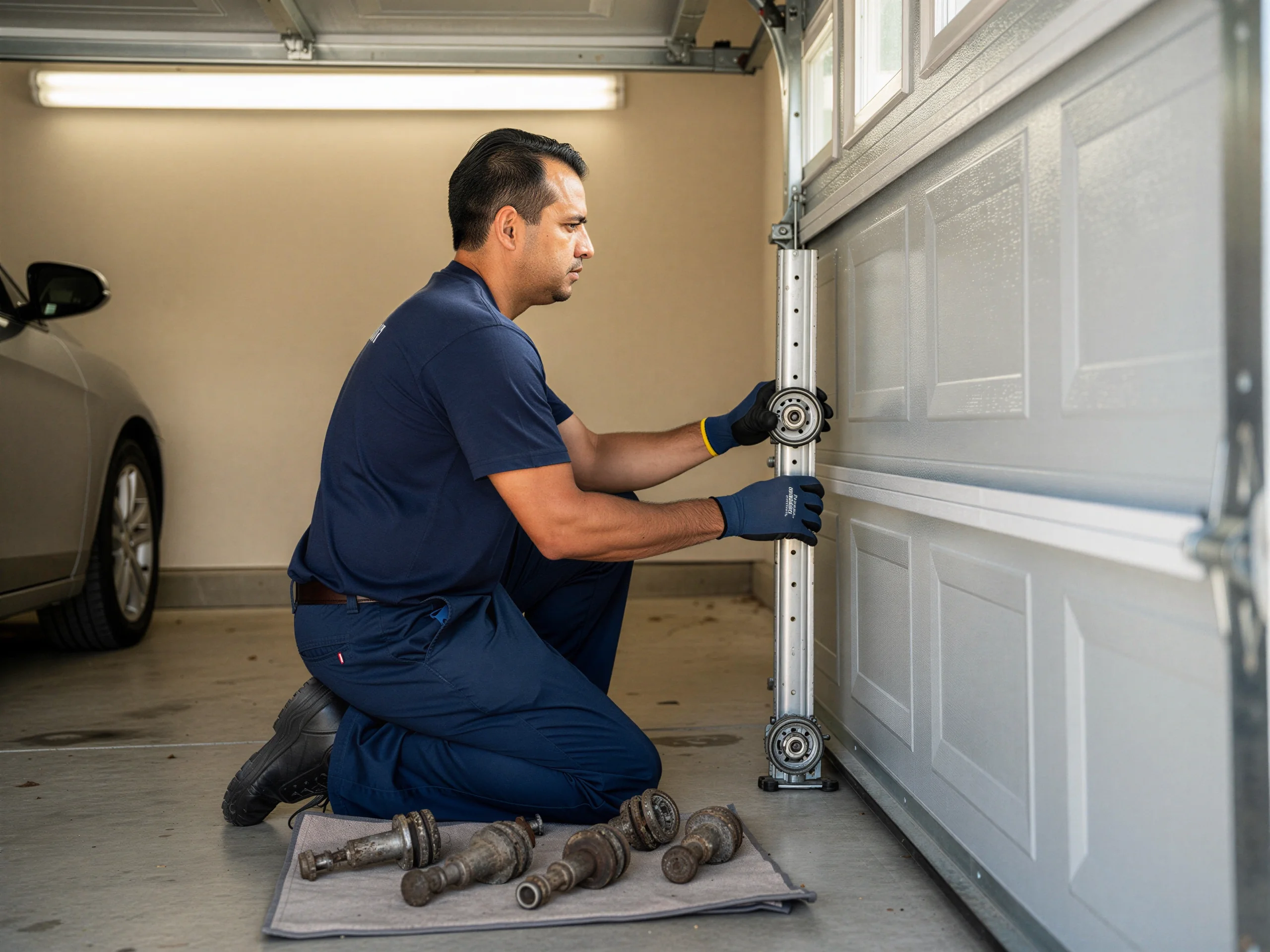
We carry rollers, cables, and standard-width torsion springs for the common door sizes built in that era, plus the hinges and center bearings that wear out first. Because the trip out is longer than a run across town, we try to carry what a 2002-era door is actually likely to need rather than show up and discover we're short a part.
Odd opener boards ordered
We don't stock every opener logic board ever made - if your unit is an odd or discontinued brand, that board may need to be ordered, and we'll tell you that up front rather than promise a same-visit fix we can't deliver.
How We Fix It
A broken spring on a door from this era usually means standard torsion hardware on a steel frame, not the older wood-jamb setups you find on homes built before the 1980s.
Wire size before quoting
We measure the spring, pull the broken halves, and match wire size and wind before we ever quote a number, because guessing on a 2002-built door usually means the wrong tension and a noisy, unbalanced door six months later.
Logic board tested first
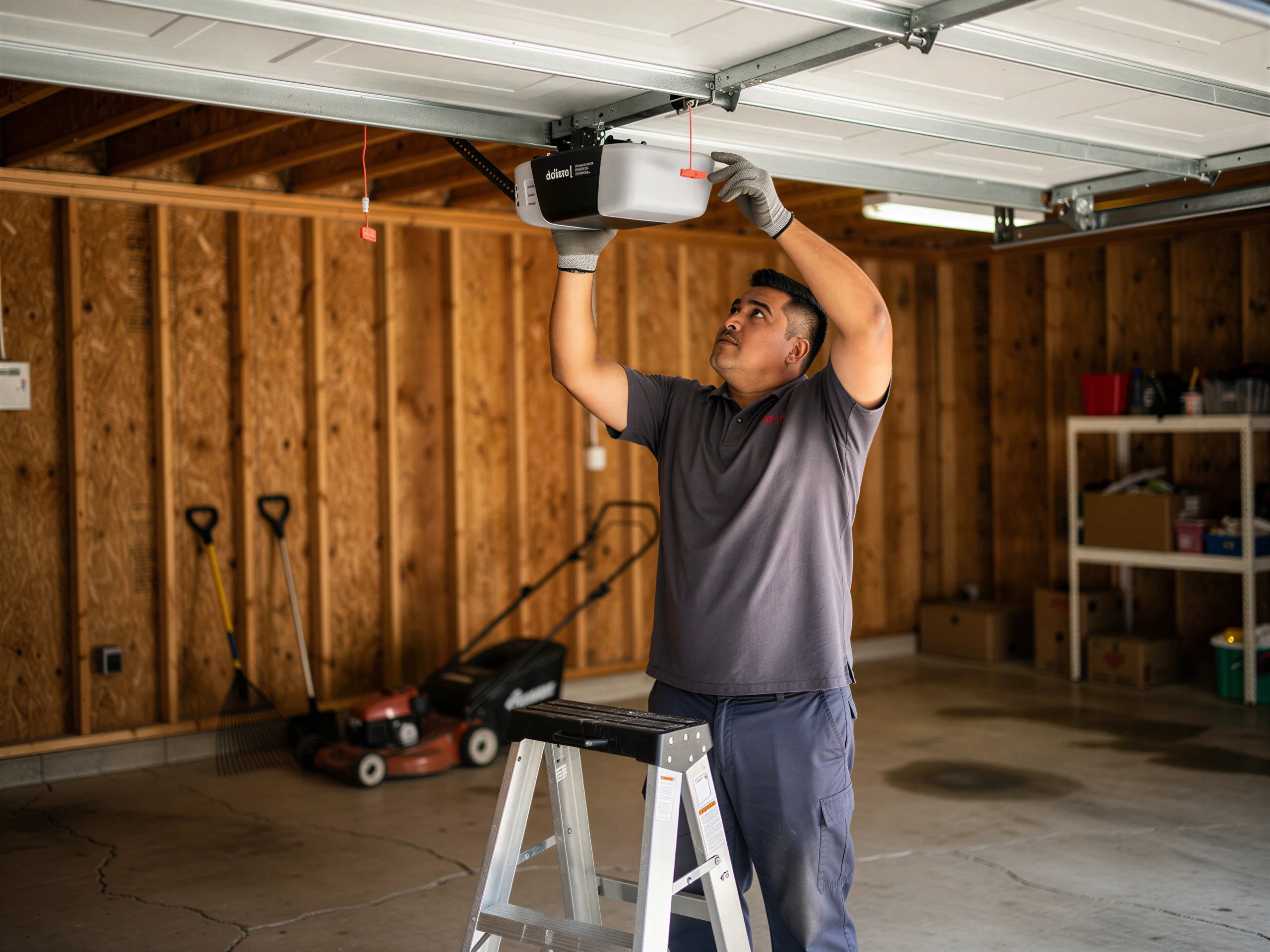
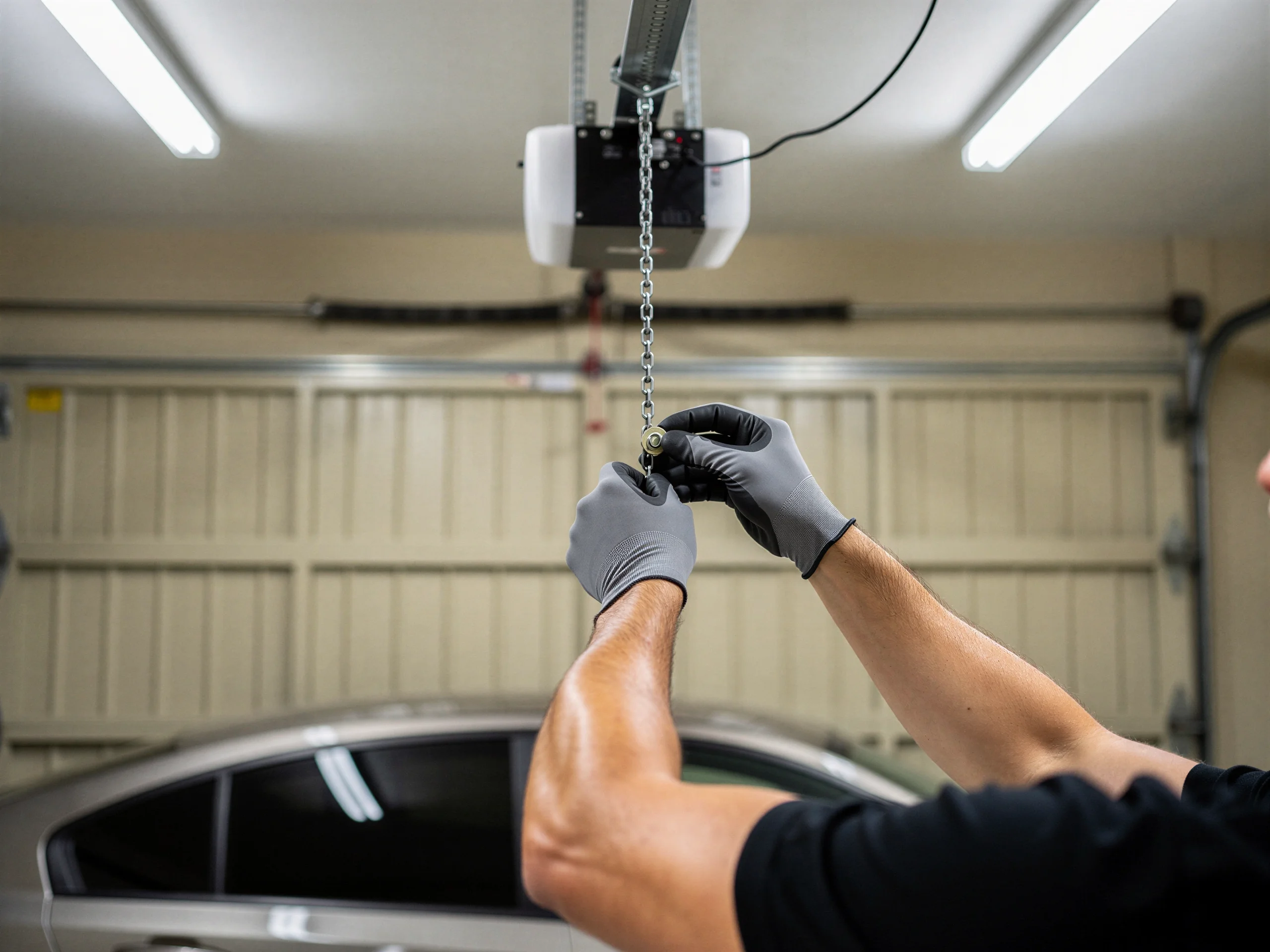
For openers, most houses here run units old enough that the circuit board or the drive gear has started to go rather than the motor itself - we test the logic board first since that's the cheaper fix.
Level before tightening
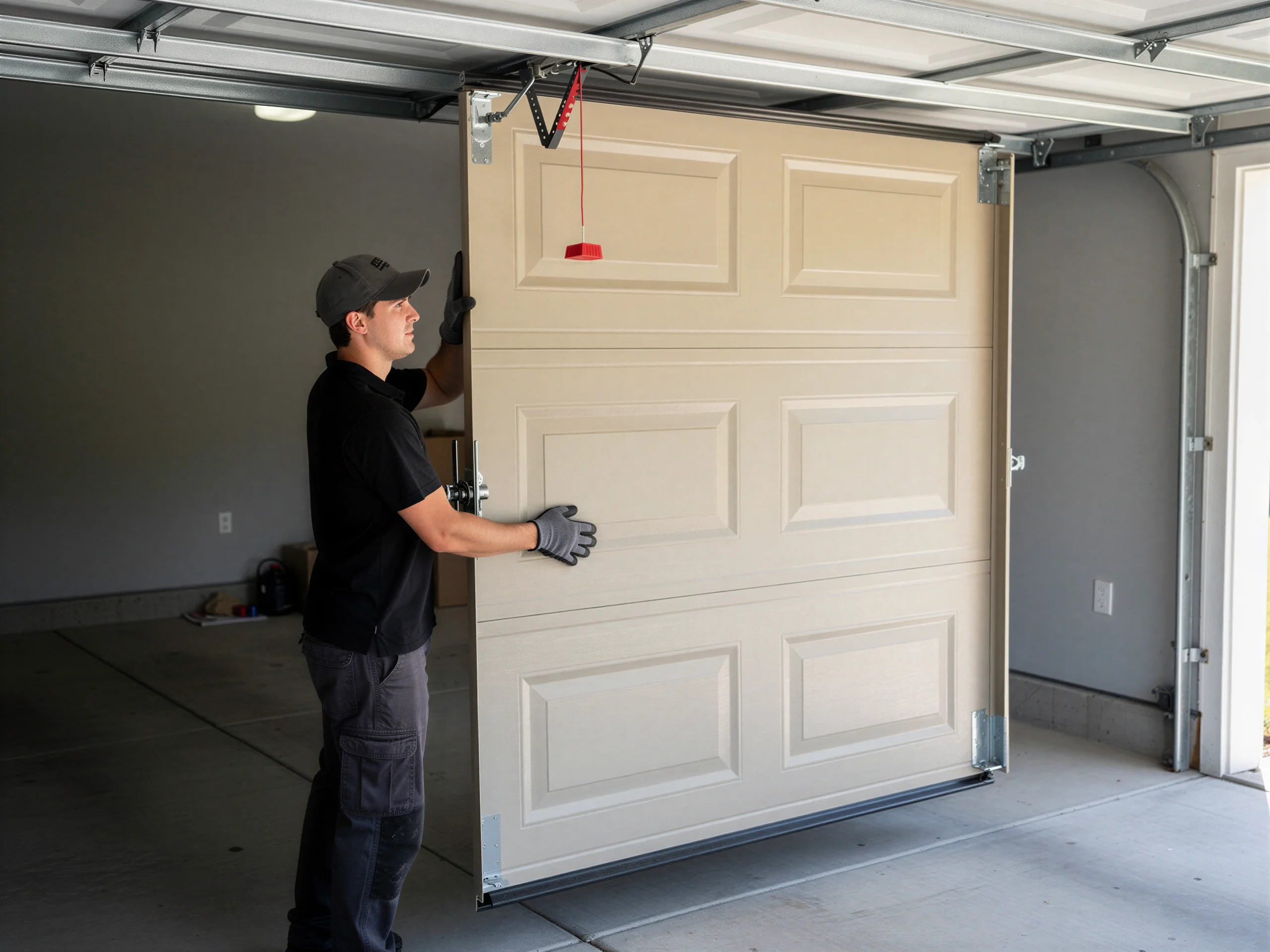
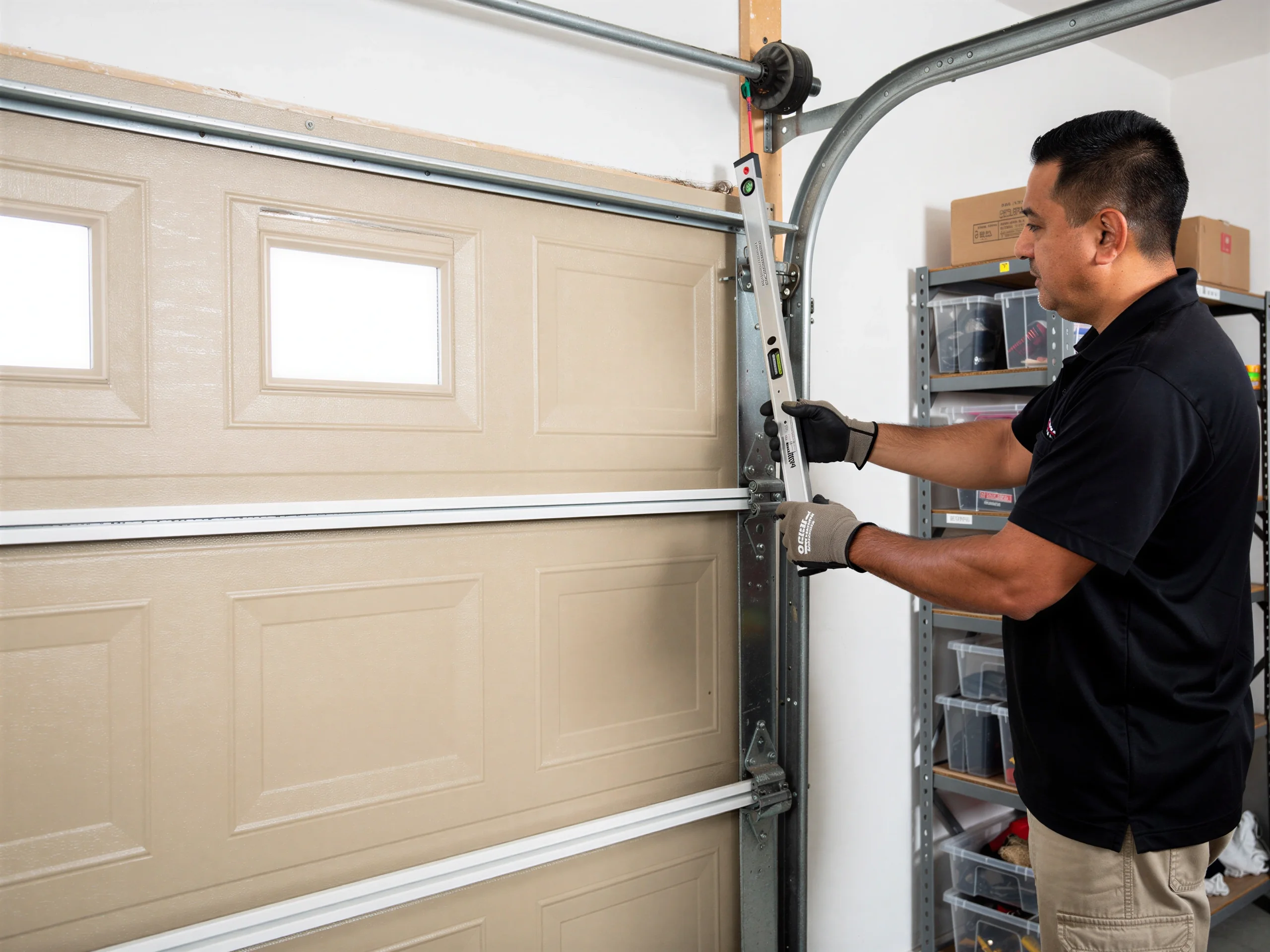
Track and roller work is straightforward unless the door's been knocked out of alignment, which we check with a level before tightening anything back down. We don't improvise on cable routing or safety sensor placement; that's not a corner worth cutting on a door that opens over a car.
Can You Do This Yourself
Rollers and hinges are fair game if you've got the patience and the door is off its track, not off its spring. Lubricating the track, tightening loose roller brackets, and replacing a worn weatherstrip are jobs a homeowner can do safely with basic tools. Torsion springs are not that job. A door built around 2002 is still carrying full-size torsion springs under real tension, and the winding bars and clamping method are not something to learn on your own garage. We also don't recommend DIY opener logic board swaps unless you're comfortable with the wiring and have confirmed the board is actually the failure point, not the motor or the sensors. If you're not sure which part failed, a phone call before you start pulling panels saves you a trip to buy the wrong part twice.
What Causes It Around Here
The 1,270 households in Elkins sit in a cold-moderate climate band, which means freeze-thaw cycling is the main thing working against a garage door over the winter. Steel panels built around 2002 handle cold better than the older doors you find closer to Fayetteville, but the hardware - cable ends, roller bearings, torsion spring coils - still contracts and expands with the swings, and that's where we see fatigue cracks and snapped springs show up first. A median household income of $81,111 in this area also means most owners here are maintaining a single door rather than running a second detached garage, so when it fails, it's usually the only way the car gets in or out, which changes how urgent a repair actually is.
How It Shows Up
The most common call out of this area is a door that won't open at all, paired with a visible gap in the torsion spring above the door - that's the snapped-spring call, and it's loud when it happens, usually a bang you hear from inside the house.
Partial-travel reversal cause
Second most common is a door that opens partway and reverses, which on a 2002-era opener usually traces back to misaligned photo-eye sensors or a drive gear that's stripped inside the housing.
Popping from worn rollers
Noisy operation - grinding or popping on the way up - points to worn rollers rather than anything structural, and it's worth fixing before it turns into a track problem.
Heavy door, weak spring
A door that's heavy to lift by hand, even with the opener disconnected, almost always means the spring has lost tension gradually rather than snapped outright, and that's worth a call before it does.
Getting It Booked In
Because we're running the roughly 9-mile drive out from Fayetteville rather than working out of a branch in Elkins, we ask a few questions up front - door size, opener brand if you know it, whether the spring snapped or just feels stiff - so the truck is loaded right the first trip. We don't keep a standing crew stationed in Elkins, so we can't promise a drop-everything response time here, but we do route jobs out this way regularly and will give you a real window rather than a vague one. See our other nearby coverage at /near/elkins/, and if what you need is broader than a single repair, our main page at /garage-door-repair-fayetteville-ar covers the full range of work we do out of the shop.
Talk to a local pro
Garage door service in Fayetteville?
Same-day service with honest, upfront quotes.